In this article
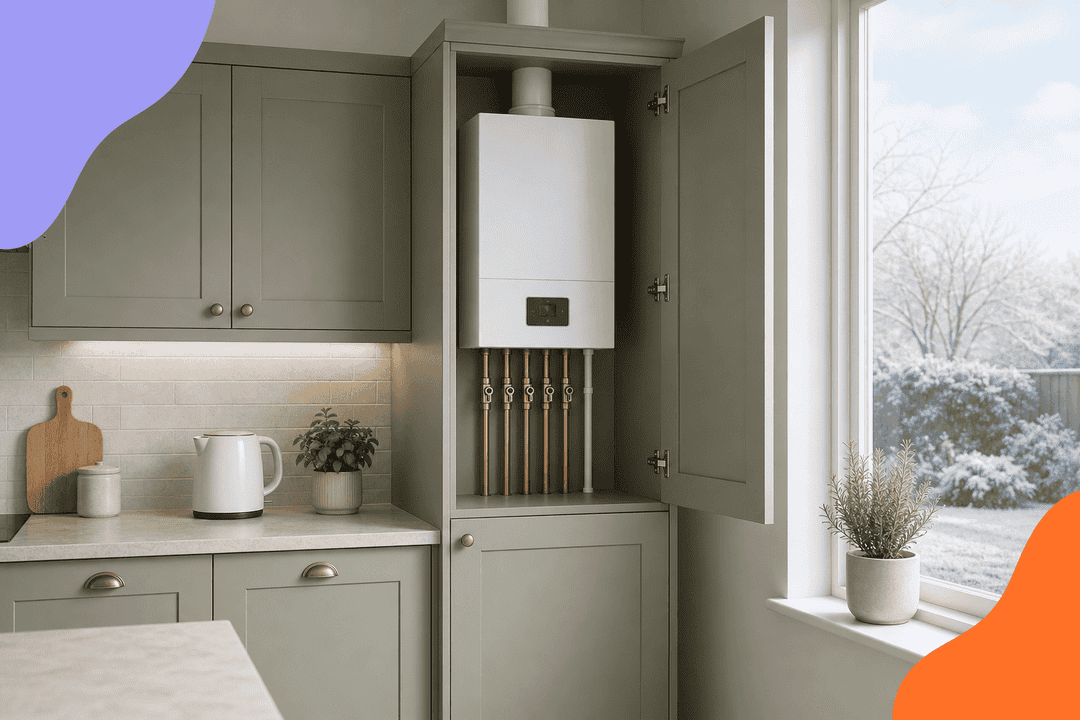
If your boiler was fitted in the last 20 years, it's almost certainly a condensing boiler. Since April 2005, new gas boilers fitted in England and Wales have had to be condensing boilers, apart from in rare cases.
This guide explains what a condensing boiler is, how it works, how to tell whether yours is one, and what that means if you're thinking about a replacement.
Quick answer: A condensing boiler is a gas or oil boiler that recovers extra heat from its own exhaust gases, heat that older boilers lose up the flue. Cooling those gases turns the water vapour in them into liquid, called condensate, which drains away through a small plastic pipe. Combi, system and regular boilers can all be condensing boilers, and every gas boiler BoxHeat installs is one.
What is a condensing boiler?
When a boiler burns gas, it produces hot exhaust gases that contain water vapour. An older non-condensing boiler sends those gases out through the flue while they're still very hot, so a lot of heat goes to waste.
A condensing boiler has a larger, more efficient heat exchanger that takes more of that heat back before the gases leave. It cools them enough for the water vapour to condense back into liquid, and turning vapour into water releases extra heat, which also goes into your heating. That's where the name comes from.
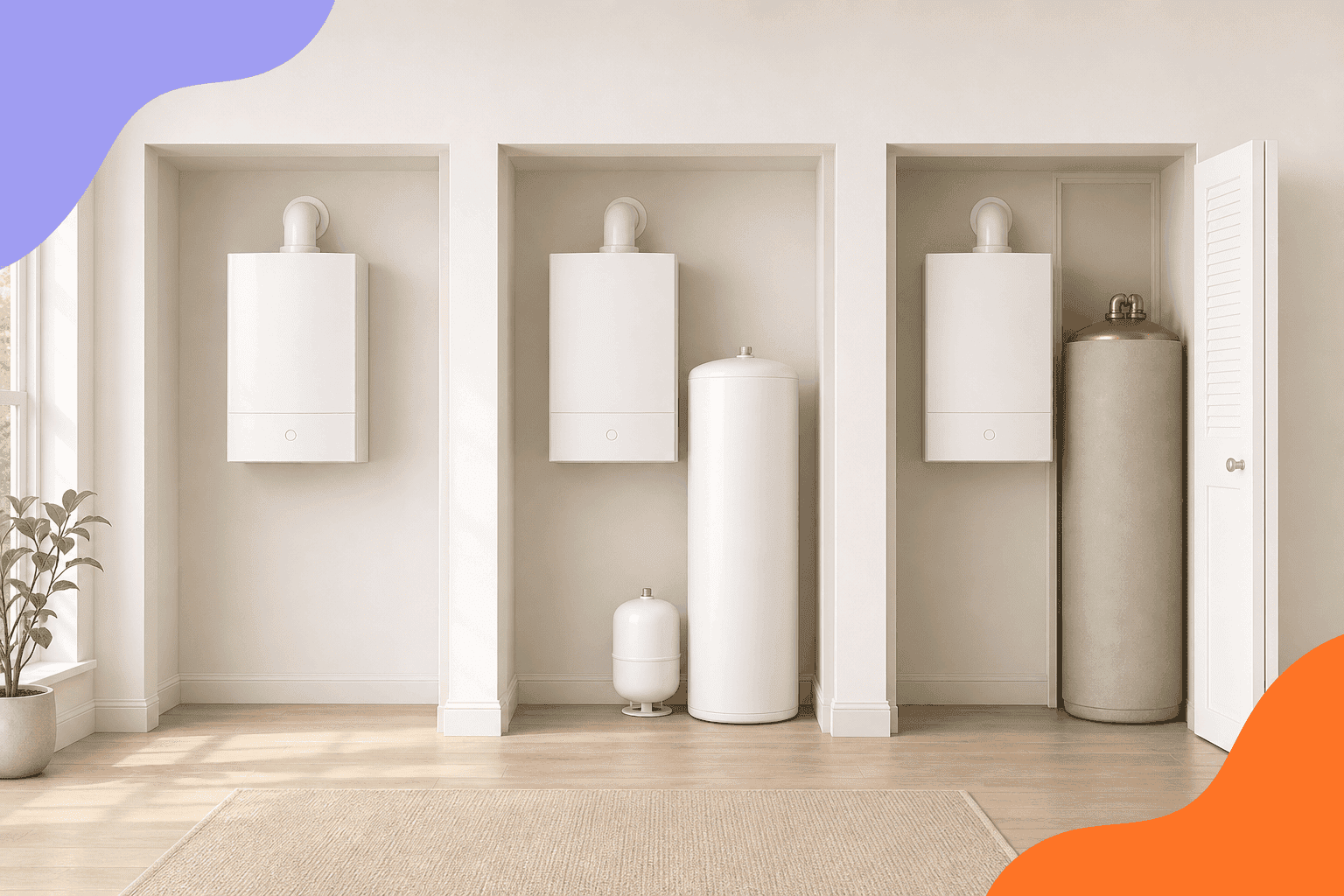
"Condensing" isn't a separate type of boiler. It describes how the boiler works, and combi, system and regular boilers are all condensing boilers when they're new. Our guide to boiler types explains the differences between them.
How does a condensing boiler work?
In simple terms, a condensing boiler works like this:
- The burner heats water in the heat exchanger, which goes round your radiators or to your taps.
- The hot exhaust gases pass over a larger heat exchanger, where cooler water coming back from your radiators picks up more of their heat.
- As the gases cool, the water vapour in them condenses, releasing more heat into the water.
- The cooled gases leave through the flue, and the condensate drains away through the condensate pipe.
A condensing boiler only condenses when the water returning from your radiators is cool enough, at around 55°C or below. That's why the temperature you set on the boiler makes a difference. Our guide to boiler temperature settings explains what to set it to.
Condensing vs non-condensing boilers
| Condensing boiler | Non-condensing boiler | |
|---|---|---|
| Heat from exhaust gases | Recovered and reused | Mostly lost up the flue |
| Typical efficiency | Over 90% for new gas boilers | Lower, especially in older models |
| Condensate pipe | Yes, a plastic pipe to a drain | No |
| White plume from the flue on cold days | Common | Less common |
| Can be fitted new in England and Wales | Yes | Only in rare cases |
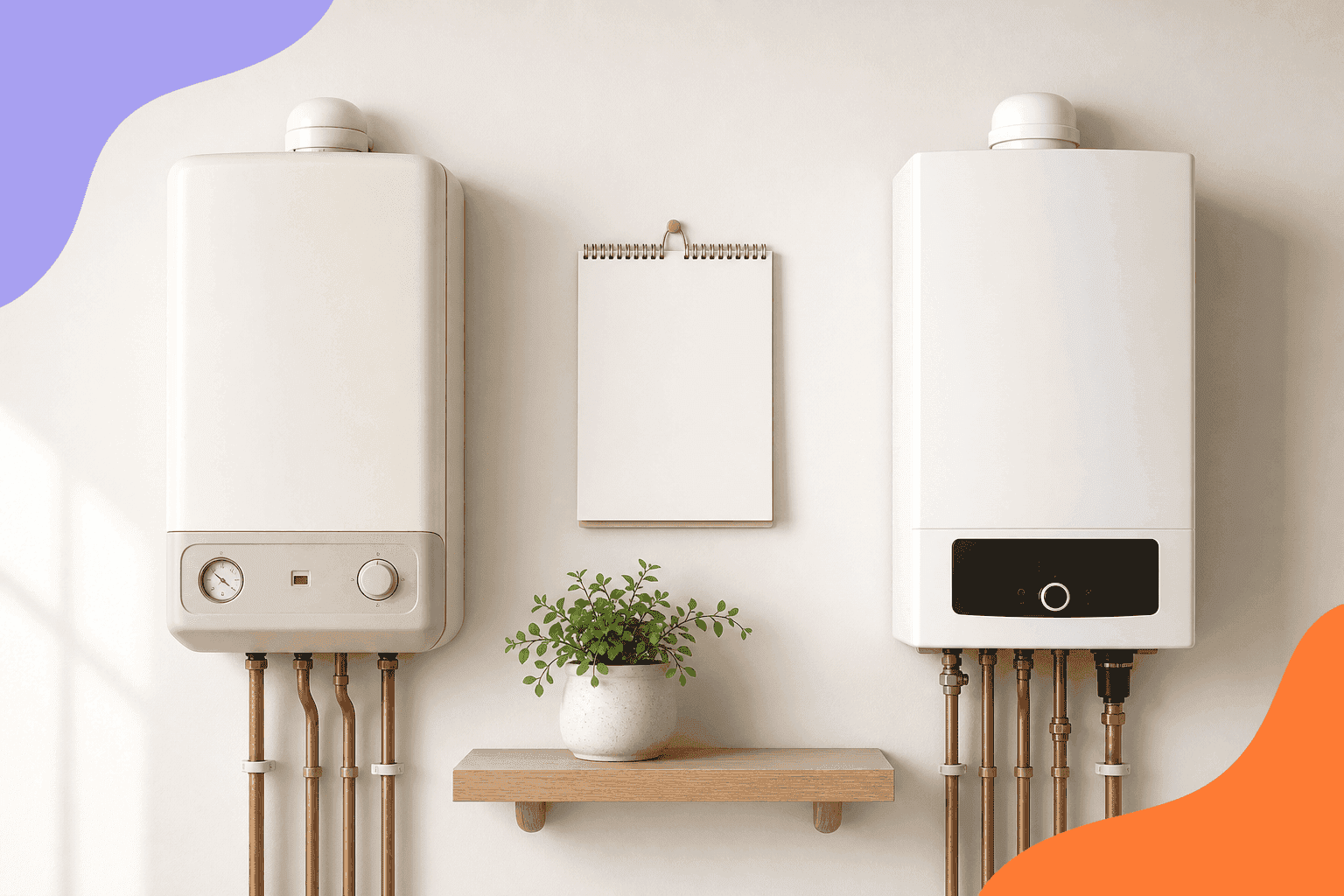
In England, gas boilers fitted in existing homes have also had to reach at least 92% efficiency since April 2018, under rules known as Boiler Plus. Any new gas boiler you're offered should be a high-efficiency condensing model.
How do I know if my boiler is a condensing boiler?
A few quick checks will usually tell you:
- Look for a condensate pipe. A condensing boiler has a plastic pipe, usually white or grey, running from the bottom of the boiler to a drain, sink waste or soakaway. No condensate pipe usually means a non-condensing boiler.
- Check when it was fitted. Most gas boilers fitted in England and Wales since April 2005 are condensing boilers.
- Look for a permanent pilot light. A small blue flame that stays lit all the time is a sign of an older boiler, and that design is almost certainly non-condensing.
- Check the paperwork. The manual, the Benchmark logbook or the make and model on the boiler will tell you, and the manufacturer can confirm it.
A back boiler, fitted behind a fire, is a non-condensing boiler. If you have one, our back boiler replacement guide explains your options.
Is a combi boiler a condensing boiler?
A new combi boiler is a condensing boiler, and so is every new system and regular boiler. "Combi" describes how the boiler provides hot water, straight from the mains with no tank. "Condensing" describes how it recovers heat from its exhaust gases. Older combis made before condensing models became standard may be non-condensing.
Our combi boiler guide explains how combis work and who they suit.
Getting the best from a condensing boiler
- Keep the flow temperature sensible. A condensing boiler is most efficient when it runs at lower temperatures, as long as your home still warms up properly. Very high settings can stop it condensing.
- Protect the condensate pipe. If part of the pipe runs outside, it can freeze in a cold snap and shut the boiler down. Our guide to a frozen condensate pipe shows how to thaw it safely.
- Don't worry about the plume. The white cloud from the flue on a cold day is water vapour, not smoke. It's normal for a condensing boiler.
- Have it serviced every year. Annual servicing by a Gas Safe registered engineer keeps it running safely and is usually a condition of the manufacturer warranty.
Should I replace a non-condensing boiler?
If an older non-condensing boiler is safe, reliable and regularly serviced, there's no rule that says you must replace it. But most non-condensing gas boilers are now more than 20 years old, parts can be harder to find, and they lose more heat up the flue than a modern boiler.
If yours is breaking down more often, or you're planning ahead before it fails, a condensing boiler is the replacement. Our guide to how long a boiler lasts covers the warning signs, and our new boiler cost guide explains what affects the price.
Replacing your boiler with BoxHeat
Every gas boiler we install is a condensing boiler from Worcester Bosch, Baxi, Ideal, Viessmann or Glow-worm. A new combi boiler starts from £1,799 fully installed (correct in November 2026), and every installation includes a magnetic system filter and a chemical system flush, with the condensate pipe fitted to suit your home. We remove your old boiler and register your manufacturer warranty for you.
If you're replacing a regular, system or back boiler with a combi, the conversion work is included in your fixed price. Answer a few questions about your home to get your fixed price. Monthly finance is available, subject to status. See our finance page for details.
If you smell gas
- Open doors and windows.
- Don't smoke, light matches or use any naked flame.
- Don't switch electrical items on or off, including lights.
- Turn off the gas at the emergency control valve next to the meter, if you can safely reach it and it isn't in a cellar or basement.
- Leave the property and, once outside, call the National Gas Emergency Service on 0800 111 999. It's free and open 24 hours a day.
Condensing boiler questions
Replace an old boiler with a modern condensing boiler
Get my fixed priceReviewed by our technical team. All BoxHeat articles are written by experienced heating professionals and reviewed by our team of Gas Safe registered engineers to ensure accuracy, safety, and compliance with current UK building regulations and manufacturer guidelines.