In this article
If your boiler sits behind a gas fire in the fireplace, you have a back boiler. Many are now decades old, and replacing one is a bigger job than a standard boiler swap.
This guide explains your options, what a back boiler to combi conversion involves and what affects the price, so you know what to expect before you start.
Quick answer
- Yes, it can usually be replaced. The new boiler normally goes in a new spot, such as the kitchen, with its own flue.
- It's a bigger job than a like-for-like swap. The old boiler and fire are removed, and with a combi the hot water cylinder and loft tanks usually aren't needed any more.
- BoxHeat converts back boilers to combis. Because the work varies from home to home, your price reflects what your home needs rather than our standard like-for-like prices.
What is a back boiler?
A back boiler is a boiler fitted inside the fireplace opening, usually behind a gas fire. It normally vents through the chimney. In most homes it's part of a traditional system with a hot water cylinder, often in an airing cupboard, and a cold water tank in the loft.
Back boilers were a common way to heat UK homes for many years, so they're still found in a lot of older properties.
Why replace a back boiler?
- Age and reliability: most back boilers are now very old, and breakdowns tend to become more frequent with age.
- Parts: replacement parts for older models can be hard to find.
- Efficiency: back boilers are non-condensing. In England and Wales, a replacement gas boiler generally has to be a high-efficiency condensing model, which recovers heat that older boilers lose up the flue.
- Space: a combi can free up the fireplace, the airing cupboard and the loft.
Not sure if yours is due for replacement? Our guide to how long a boiler lasts covers the warning signs.
Your replacement options
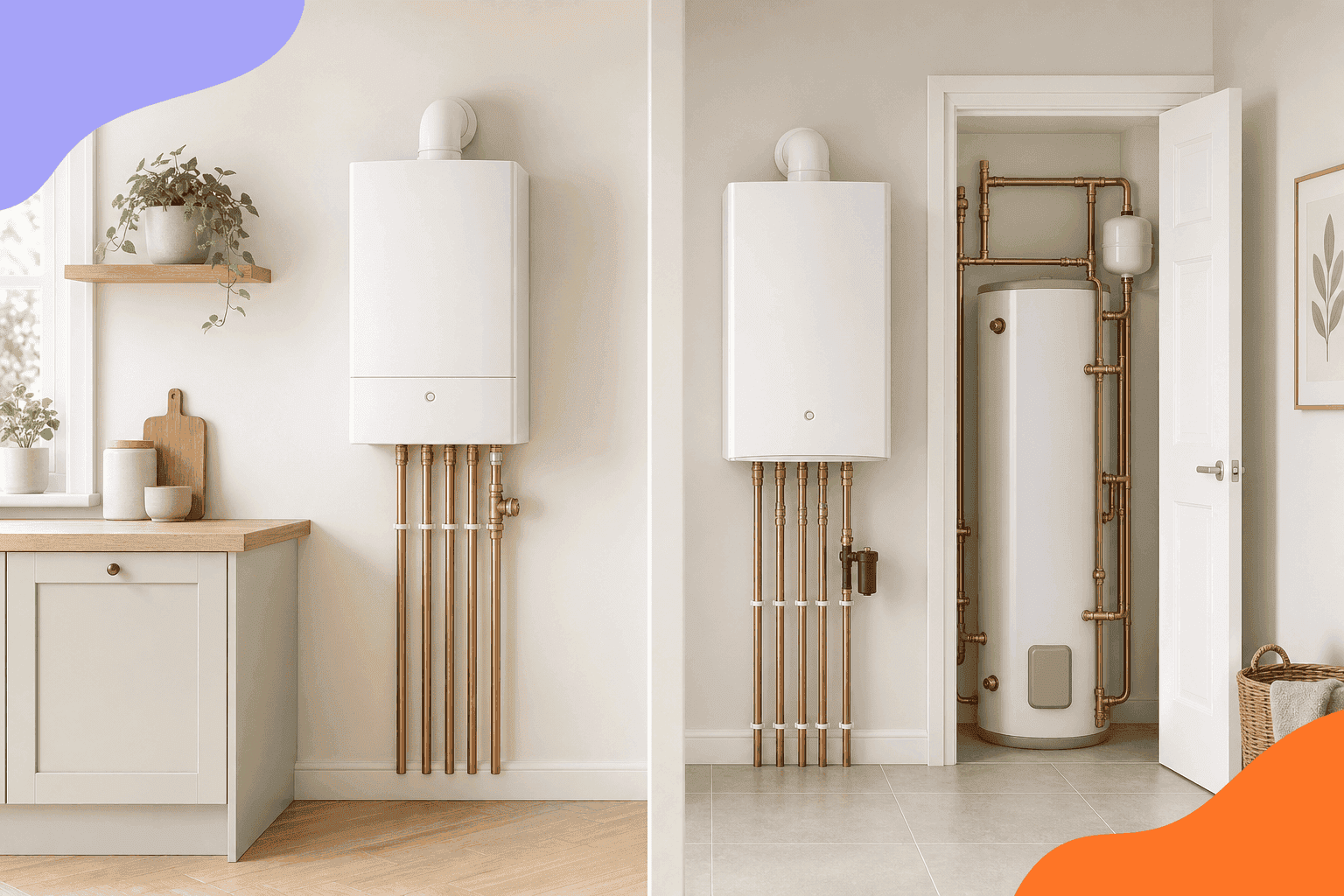
A back boiler doesn't have to be replaced with the same kind of system. There are three main types of modern boiler:
Back boiler to combi
A combi heats water straight from the mains when you turn on a tap, so you no longer need a hot water cylinder or a cold water tank in the loft. This is the conversion BoxHeat quotes for online.
Back boiler to system boiler
A system boiler works with a hot water cylinder, so it can suit larger homes that use a lot of hot water at once, as long as there's space for the cylinder.
Back boiler to regular boiler
A regular boiler works with a cylinder and a loft tank, so it can sometimes reuse parts of the existing hot water setup.
We don't quote hot water cylinder work online, so a back boiler to system or regular boiler swap isn't available through our online quote. If that's what you'd prefer, call us on 020 4614 2422 and we can arrange it. Our guide to combi vs system boilers explains the differences in more detail.
Is a combi right for your home?
For many homes with a back boiler, a combi is a good fit. It usually suits you if:
- your mains water pressure and flow are good, because a combi's hot water comes straight from the mains
- you usually need hot water in one place at a time, for example one shower running
- you'd like to free up the airing cupboard and loft
If several people often need hot water at the same time, or your mains supply is weak, a combi may not be the best choice. Our guide to what size boiler you need helps you work out the right output, and our guide to converting to a combi boiler explains what changes at home.
What's involved in a back boiler to combi conversion?
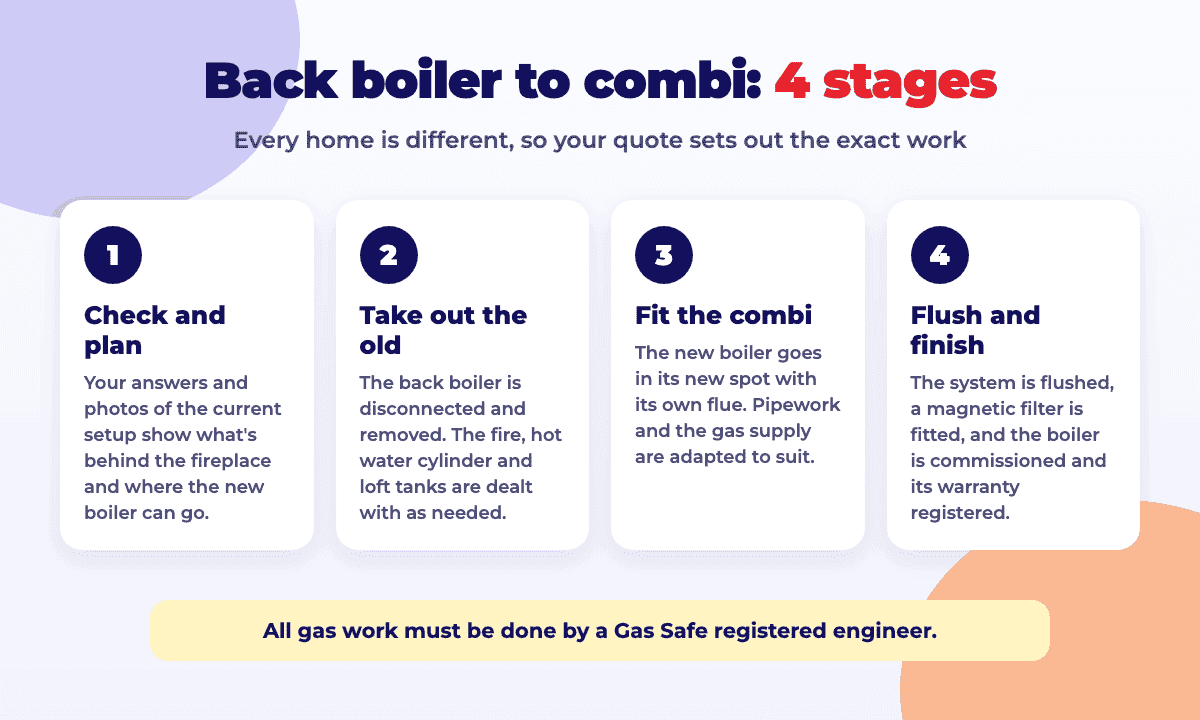
No two conversions are exactly the same. Depending on your home, the work can include:
- safely disconnecting and removing the back boiler
- disconnecting the gas fire in front of it where needed
- removing or decommissioning the hot water cylinder and loft tanks
- adapting the pipework, and upgrading the gas supply pipe if the new boiler needs it
- fitting the new combi in its new location, with its own flue
- a chemical system flush, inhibitor treatment and a magnetic system filter, which come with every BoxHeat installation
- commissioning the boiler and registering its warranty for you
Building and finishing work around the fireplace, such as blocking up the opening, plastering or decorating, is worth planning for separately.
Where will the new boiler go?
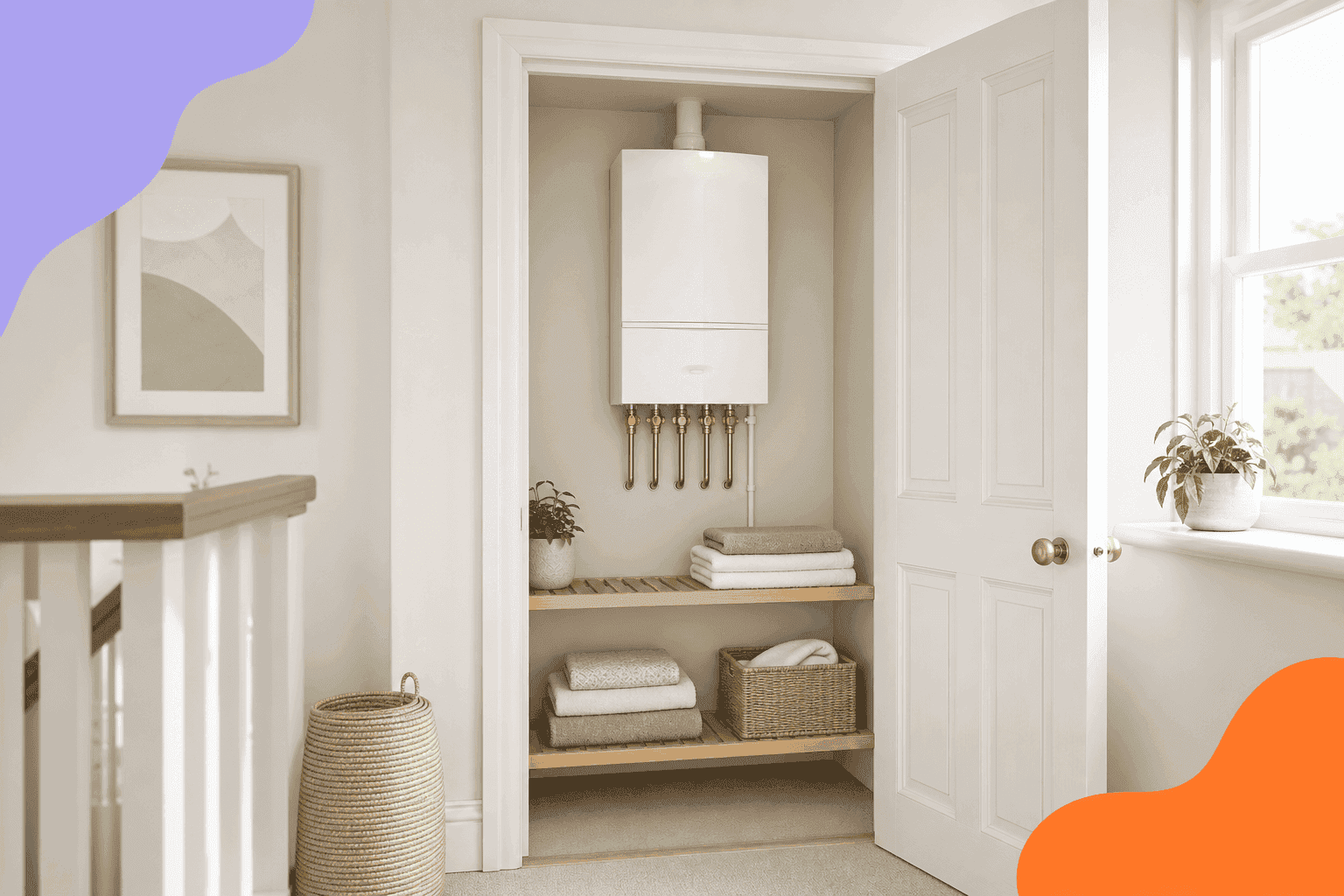
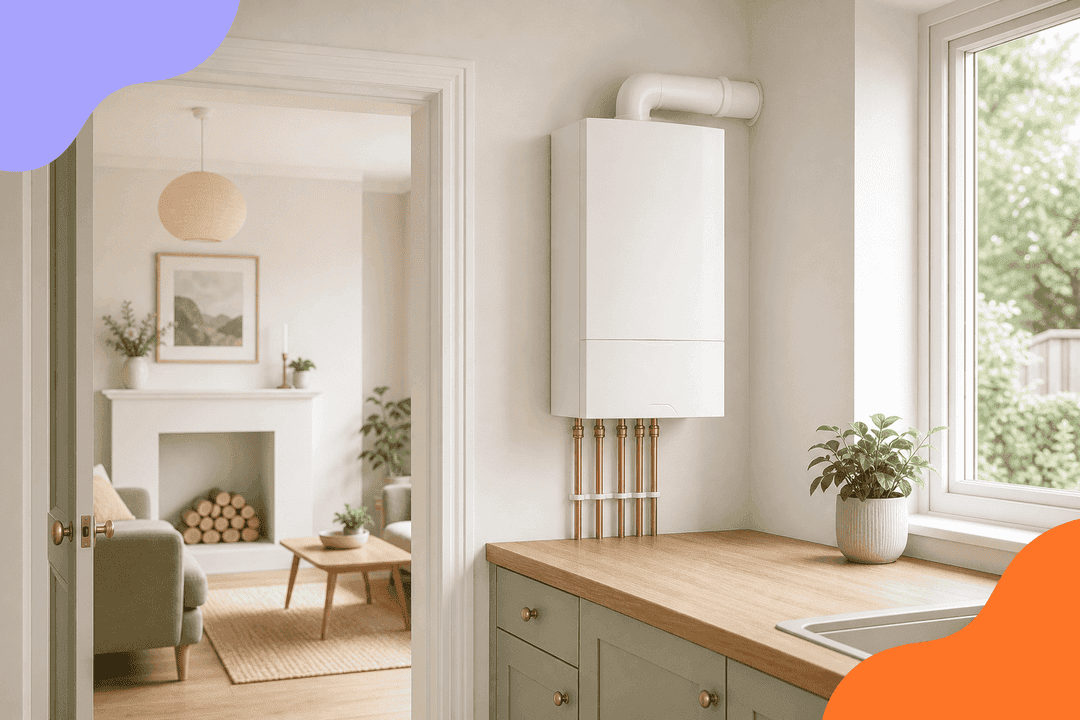
A modern combi normally goes in a new location rather than in the fireplace. Kitchens, utility rooms and the old airing cupboard are common choices. The right spot depends on a suitable flue route, the pipework, a drain for the condensate pipe and room for future maintenance.
Our boiler relocation guide explains the pros and cons of different locations.
Flue and chimney
A back boiler usually vents through the chimney. A modern combi needs its own flue, fitted to the manufacturer's instructions and ending in a suitable spot outside.
Once the back boiler is gone, the old chimney arrangement may not be needed. How it's dealt with depends on the chimney and whether anything else uses it. If you'd like a new fire or stove in the fireplace later, that's a separate appliance with its own installation and checks.
Asbestos in older installations
The Health and Safety Executive advises that buildings built or refurbished before 2000 may contain asbestos, and lists lagging on boilers and pipes among the places it can be found. In an older back boiler installation, materials around the boiler, fire or flue could contain it.
Asbestos is a risk when it's disturbed, so don't drill, sand or break anything you're unsure about. Anything suspected needs to be properly assessed and handled before work goes ahead. Asbestos removal isn't part of a standard installation, and if it's suspected we'll explain what's needed before any work starts.
What affects the cost?
Every conversion is different, so the price depends on things like:
- the combi model and output you choose
- where the new boiler goes, and how far that is from the existing pipework and gas supply
- the route for the new flue
- the cylinder and tanks that need removing or decommissioning
- how much pipework needs adapting, and whether the gas supply pipe needs upgrading
- the fire and chimney arrangement you have now
- anything that needs further assessment, such as suspected asbestos
That's why back boiler conversions aren't priced from our standard like-for-like prices. For current prices and what's included in every installation, see our guide to new boiler costs. Monthly finance is available, subject to status.
How the quote works
Our online quote asks about your current boiler, your heating system and where you'd like the new boiler to go, and gives you one fixed price. After you book, we ask for photos of your existing setup so our technical team can confirm the details.
Back boiler installations vary a lot behind the fireplace. If the photos show something that couldn't reasonably have been spotted from your answers, or something that needs a closer look, we'll contact you to talk it through before any work goes ahead. No extra work is carried out without your agreement.
When you're ready, get your fixed price for a back boiler conversion.
How long does it take?
A back boiler conversion takes longer than a like-for-like boiler swap because of the removal and conversion work. How long depends on how much needs doing in your home, and your quote will give you a clear idea.
If you smell gas
- Open doors and windows.
- Don't smoke, light matches or use any naked flame.
- Don't switch electrical items on or off, including lights.
- Turn off the gas at the emergency control valve next to the meter, if you can safely reach it and it isn't in a cellar or basement.
- Leave the property and, once outside, call the National Gas Emergency Service on 0800 111 999. It's free and open 24 hours a day.
Back boiler questions
Ready to replace your back boiler? See your fixed price
Get my fixed priceReviewed by our technical team. All BoxHeat articles are written by experienced heating professionals and reviewed by our team of Gas Safe registered engineers to ensure accuracy, safety, and compliance with current UK building regulations and manufacturer guidelines.