
In this article
Boiler Types Explained
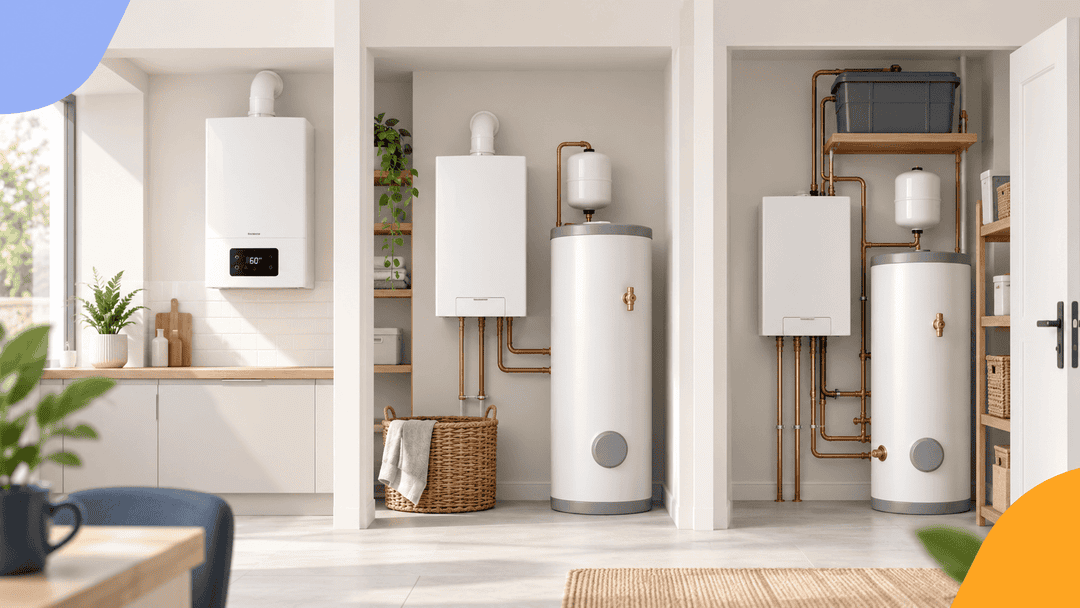
Choosing the right boiler starts with understanding the different types available. In UK homes, the three main types are combi, system and regular boilers. Each works differently and has different requirements for hot water, heating, space and installation.
There isn't one boiler type that is best for every home. The right choice depends on factors such as the size of your property, how much hot water you use, the number of bathrooms, your existing heating system and the space available for components such as a hot water cylinder or cold water storage tank.
This guide explains how each boiler type works, the main advantages and disadvantages, and which type may be suitable for different homes.
Quick Answer
Combi boilers heat hot water directly from the mains and do not require a separate hot water cylinder or cold water storage tank. They can be a good choice for homes with straightforward hot water requirements, particularly where space is limited.
System boilers use a hot water cylinder but do not normally require a separate cold water storage tank. They can be a good option for homes with higher hot water demand or multiple bathrooms.
Regular boilers, also known as conventional or heat-only boilers, work with a hot water cylinder and usually a cold water storage cistern. They are commonly found in older heating systems and can be suitable where a traditional system is already installed.
The best choice depends on your home's heating and hot water requirements rather than simply the size of the property.
At a Glance
| Boiler Type | Best Suited To | Hot Water Cylinder | Cold Water Storage Tank |
|---|---|---|---|
| Combi boiler | Homes with straightforward hot water requirements | No | No |
| System boiler | Homes with higher hot water demand | Yes | No |
| Regular boiler | Homes with traditional heating systems | Yes | Usually |
The three main boiler types work in different ways, so the most suitable option depends on your home's heating and hot water requirements.
Combi boilers provide heating and hot water directly from the boiler without a separate hot water cylinder.
System boilers work with a hot water cylinder to store hot water, while most of the main components are built into the boiler itself.
Regular boilers, sometimes called heat-only or conventional boilers, work with a hot water cylinder and a cold water storage cistern. They are commonly found in traditional heating systems.
The right boiler type isn't determined by property size alone. Your existing heating system, hot water demand, number of bathrooms and available space should all be considered.
What Are the Main Types of Boiler?
There are three main types of boiler used in UK homes: combi, system and regular boilers.
The main difference is how each boiler provides and stores hot water.
Combi boilers heat hot water directly from the mains when you turn on a tap or shower. They do not need a separate hot water cylinder or cold water storage tank.
System boilers heat water and store it in a separate hot water cylinder. Most of the main heating components are built into the boiler, so they do not normally need a cold water storage tank.
Regular boilers heat water for a separate hot water cylinder and normally use a cold water storage cistern. They are often found in older properties with traditional heating systems.
The best option depends on your home's hot water demand, existing heating system, available space and mains water supply.
Combi Boilers
A combi boiler, short for combination boiler, provides both central heating and hot water from a single appliance.
When you turn on a hot tap or shower, the boiler heats water directly from the mains rather than storing it in a cylinder. This means hot water is available on demand and there is no need for a separate hot water cylinder or cold water storage tank.
Combi boilers are popular because they can save space and provide a straightforward heating and hot water system.
They can be particularly suitable for homes with one bathroom and straightforward hot water requirements, although the suitability of a combi also depends on the property's mains water flow and pressure.
Advantages of a combi boiler
- Hot water on demand without a storage cylinder
- Space saving because fewer components are required
- No cold water storage tank is normally needed
- Can be a straightforward option for many homes
- Hot water is heated as it is needed, rather than stored
Things to consider
A combi boiler has to supply hot water as it is being used. If several showers or taps are likely to be used at the same time, the boiler and mains water supply need to be capable of meeting that demand.
For homes with higher hot water requirements, a system boiler with a hot water cylinder may be more suitable.
For more detail, see our Combi Boilers guide
System Boilers
A system boiler provides central heating and hot water using a separate hot water cylinder.
Unlike a regular boiler, most of the main heating components are built into the boiler itself, so a separate cold water storage tank is not normally required.
Hot water is heated and stored in the cylinder, meaning a system boiler can provide a large volume of hot water for households where demand is higher or where more than one outlet may be used.
Advantages of a system boiler
- Good for higher hot water demand
- Works with a separate hot water cylinder
- Does not normally require a cold water storage tank
- Can be suitable for homes with multiple bathrooms
- Hot water can be stored and available for use when needed
Things to consider
A system boiler needs space for a hot water cylinder, so it generally requires more room than a combi boiler.
Because hot water is stored in the cylinder, the amount available at any one time depends on the cylinder's capacity and how quickly it can be reheated.
A system boiler can be a good option where a combi boiler may struggle to meet the household's hot water demand.
For more detail, see our System Boilers guide.
Regular Boilers
A regular boiler, also known as a heat-only or conventional boiler, works with a separate hot water cylinder and normally a cold water storage cistern.
The cold water storage cistern is usually located in the loft and supplies cold water to the hot water cylinder. The boiler then heats water for the heating system and hot water cylinder.
Regular boilers are commonly found in older properties and traditional heating systems.
Advantages of a regular boiler
- Can work well with an existing traditional heating system
- Suitable for homes with a separate hot water cylinder
- Can provide hot water to multiple outlets
- Does not rely on the boiler heating hot water directly as it is used
Things to consider
A regular boiler system normally requires more components and storage space than a combi boiler.
Changing from a regular boiler to another type may involve changes to the existing heating and hot water system, so the property's current setup needs to be considered before deciding which option is suitable.
If your home already has a regular boiler, replacing it with another regular boiler can sometimes be the more straightforward option.
For more detail, see our Regular Boilers guide.
Combi vs System vs Regular: What's the Difference?
| Feature | Combi Boiler | System Boiler | Regular Boiler |
|---|---|---|---|
| Provides heating | Yes | Yes | Yes |
| Provides hot water | Yes | Yes | Yes |
| Hot water cylinder | No | Yes | Yes |
| Cold water storage tank | No | No | Usually |
| Hot water heated on demand | Yes | No | No |
| Suitable for higher hot water demand | Depends on mains supply and boiler size | Often | Often |
| Works with traditional heating systems | Sometimes | Sometimes | Yes |
| Space required | Less | More | More |
The biggest difference between the three boiler types is how hot water is produced and stored.
A combi boiler heats water directly from the mains when you need it. A system boiler heats water and stores it in a cylinder, while a regular boiler normally works with both a cylinder and a cold water storage cistern.
This means the choice isn't simply about which boiler is newest or most efficient. It is about finding a system that suits the way your home uses heating and hot water.
For example, a home with limited space and straightforward hot water requirements may benefit from a combi boiler. A home with higher hot water demand may be better suited to a system boiler, while a property with an existing traditional heating system may be suitable for a regular boiler.
If you're deciding between a combi and system boiler specifically, see our Combi vs System Boilers guide.
Which Boiler Type Is Best for Your Home?
There is no single boiler type that is best for every home. The right choice depends on how your home is set up and how you use your heating and hot water.
When comparing boiler types, consider:
- How many bathrooms you have and whether hot water is likely to be used at the same time
- Your mains water flow and pressure, particularly if you're considering a combi boiler
- The space available for a hot water cylinder or cold water storage tank
- Your existing heating system and whether you want to keep the current arrangement
- Your household's hot water demand
- The size and layout of your property
- Whether the installation requires changes to your existing system
A larger home does not automatically need a system or regular boiler, just as a smaller home does not automatically need a combi. The way the property uses hot water and the practical requirements of the installation are more important than property size alone.
If you're unsure which option is suitable, a heating professional can assess your existing system and recommend the most appropriate boiler type.
Combi Boilers: When Are They a Good Choice?
A combi boiler can be a good choice where space is limited and hot water demand is relatively straightforward.
Because there is no separate hot water cylinder or cold water storage tank, a combi can free up valuable cupboard or airing-cupboard space.
However, the available mains water flow and pressure are important. A combi boiler has to deliver hot water as it is needed, so the system needs to be capable of supplying the required flow rate.
A combi may be less suitable where several showers or hot water outlets are regularly used at the same time. In these situations, a stored hot water system such as a system boiler and cylinder may be worth considering.
It's the property's hot water requirements, rather than simply the number of bedrooms, that should guide the decision.
System Boilers: When Are They a Good Choice?
A system boiler can be a good option where a home has higher hot water demand and there is enough space for a hot water cylinder.
Because hot water is stored in the cylinder, a system boiler can provide a larger volume of hot water for households where several people may need hot water around the same time.
System boilers can be particularly useful in homes with multiple bathrooms or higher hot water requirements, although the cylinder size and heating system still need to be appropriate for the property.
They can also be a practical choice where a home already has a system boiler and cylinder installed, as replacing the boiler without changing the overall system may be more straightforward.
The main consideration is that a system boiler requires space for the hot water cylinder, so it isn't always the best option where storage space is limited.
Regular Boilers: When Are They a Good Choice?
A regular boiler can be a suitable choice where a property already has a traditional heating system with a hot water cylinder and cold water storage cistern.
They are particularly common in older homes, and keeping the same type of system can sometimes avoid the additional work involved in converting to a different boiler type.
A regular boiler can also be appropriate where the property's existing plumbing and heating system is designed around stored hot water.
However, regular boiler systems require more space because they normally include both a hot water cylinder and cold water storage cistern.
If you're considering replacing a regular boiler with a different type, the existing heating system should be assessed first to determine what changes would be required.
Can You Change From One Boiler Type to Another?
Yes, it is possible to change from one boiler type to another, but the amount of work involved depends on the existing heating and hot water system.
For example, changing from a regular boiler to a combi boiler can involve removing the hot water cylinder and cold water storage cistern, altering pipework and making other changes to the heating and hot water system.
Changing from a regular boiler to a system boiler may involve fewer changes because both systems use a hot water cylinder, although the existing installation still needs to be assessed.
A combi-to-combi replacement is generally more straightforward because the basic system arrangement is already in place.
The cost and practicality of changing boiler type therefore depend on the property and the work required, rather than simply the boiler itself.
If you're considering changing your boiler type, the installation should be assessed before deciding which option is most suitable.
What About Back Boilers?
Back boilers are an older type of heating appliance, often found behind fireplaces in properties built several decades ago.
They are no longer commonly installed in new heating systems. If you have an existing back boiler, replacing it can be more involved than a straightforward boiler-for-boiler replacement because the appliance and its associated system may need to be removed or altered.
One common option is converting an existing back boiler system to a modern combi boiler, although whether this is suitable depends on the property and the existing heating system.
If you have a back boiler and are considering replacing it, see our Back Boiler to Combi Conversion Guide for more information.
How Do You Choose the Right Boiler Type?
Choosing the right boiler type starts with understanding how your home uses heating and hot water.
Rather than choosing a boiler based on property size alone, consider the following:
- Hot water demand: How many people live in the property and how often are showers, baths and taps used?
- Number of bathrooms: Multiple bathrooms can increase the demand for hot water.
- Mains water supply: If you're considering a combi boiler, the available water flow and pressure are important.
- Available space: A system or regular boiler requires additional components, including a hot water cylinder.
- Existing heating system: Keeping the same boiler type may be simpler, while changing system type can involve additional work.
- Future requirements: Think about whether your household's heating and hot water needs are likely to change.
There is no universal answer. The most suitable boiler type is the one that can comfortably meet your home's heating and hot water requirements while working with the property's existing setup.
Boiler Type and Boiler Size Are Different Things
It's important to distinguish between boiler type and boiler size.
The boiler type describes how the system produces and supplies hot water. The boiler's size, usually expressed in kilowatts (kW), relates to its heating output.
A larger property does not automatically require a particular boiler type or the highest available output. The correct output depends on factors such as the home's heat loss, the heating system and its hot water requirements.
Once you've decided which type of boiler is suitable, the next step is to determine the appropriate boiler output.
See our Boiler Size Guide to learn more about choosing the right boiler output for your home.
Key Things to Remember
Choosing a boiler type is about finding the right balance between hot water demand, available space and the existing heating system.
The key points to remember are:
- Combi boilers heat hot water on demand and do not normally need a cylinder or cold water storage tank.
- System boilers use a hot water cylinder and can be suitable for homes with higher hot water demand.
- Regular boilers use a hot water cylinder and normally a cold water storage cistern, making them common in traditional heating systems.
- Mains water flow and pressure are important when considering a combi boiler.
- Available space is an important consideration for system and regular boilers.
- Changing boiler type is possible, but the work involved depends on the existing system.
- Boiler type and boiler output are separate decisions. Once the appropriate type has been considered, the boiler output also needs to be suitable for the property.
If you're replacing an existing boiler, the best option isn't necessarily the same type you already have. The existing system should be assessed alongside your household's heating and hot water requirements.
Frequently Asked Questions
Get the Right Boiler for Your Home
Not sure which boiler type is right for your home?
Get My Fixed Price QuoteBefore You Leave
Choosing a boiler isn't just about the boiler itself. The type of heating system, hot water demand, available space and existing pipework all need to be considered.
A combi boiler can be a practical choice for some homes, while a system or regular boiler may be more suitable for others.
The right boiler is the one that meets your home's heating and hot water requirements without installing a system that's unnecessarily complicated or unsuitable for the property.
Reviewed by our technical team. All BoxHeat articles are written by experienced heating professionals and reviewed by our team of Gas Safe registered engineers to ensure accuracy, safety, and compliance with current UK building regulations and manufacturer guidelines.