In this article
If your boiler stops working on a freezing morning, the most likely cause is a frozen condensate pipe. It's frustrating, but it's rarely a sign of a serious fault, and you can usually fix it yourself in a few minutes without calling anyone out.
This guide shows you how to tell if your condensate pipe has frozen, how to thaw it safely, and how to stop it happening again.
Quick answer
- Signs: the boiler stops during a cold snap, you hear gurgling, and it shows a fault code.
- Fix: find the white plastic pipe outside, warm it with a hot water bottle or pour warm (never boiling) water along it, then reset the boiler.
- Prevent: fit waterproof insulation to the part of the pipe that runs outside.
What is a condensate pipe?
Since April 2005, almost every new or replacement gas boiler fitted in England and Wales has had to be a condensing boiler. Condensing boilers are more efficient because they recover heat from the hot exhaust gases. As those gases cool, the water vapour in them turns into water, called condensate.
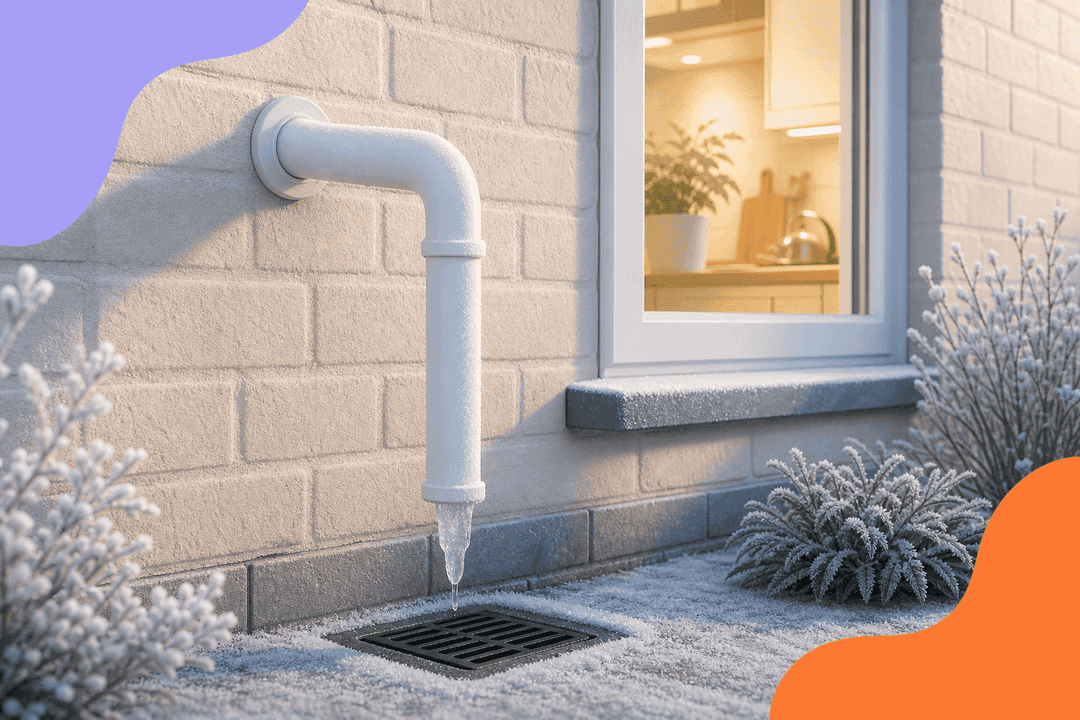
The condensate drains away through a plastic pipe, usually white, that runs from the bottom of the boiler to a drain. In many homes, part of that pipe runs outside. When temperatures stay below freezing, the water sitting in the outside section can freeze and block the pipe. The condensate then has nowhere to go, so the boiler shuts itself down to protect itself.
Signs your condensate pipe has frozen
- Your boiler has stopped or won't restart, and it's been below freezing.
- You can hear gurgling from the boiler or the pipe.
- The boiler is showing a fault code.
- You can see ice at the end of the pipe outside, or frost along it.
The fault code depends on the make of your boiler. These are the codes manufacturers link to a frozen or blocked condensate pipe:
| Boiler make | Code you might see | Notes |
|---|---|---|
| Worcester Bosch | EA | Worcester Bosch's own frozen condensate advice mentions EA |
| Baxi | E133 (the display may alternate between E1 and 33), or E28 on some models | From Baxi's thawing guide |
| Ideal (Logic models) | L2 | Ideal says to check the condensate pipe first when you see L2 |
| Vaillant | F28 | An ignition fault; a frozen condensate pipe is one possible cause |
These codes can also mean other faults, so check your boiler manual for your model. If it isn't freezing outside, a frozen pipe is unlikely to be the cause.
How to thaw a frozen condensate pipe
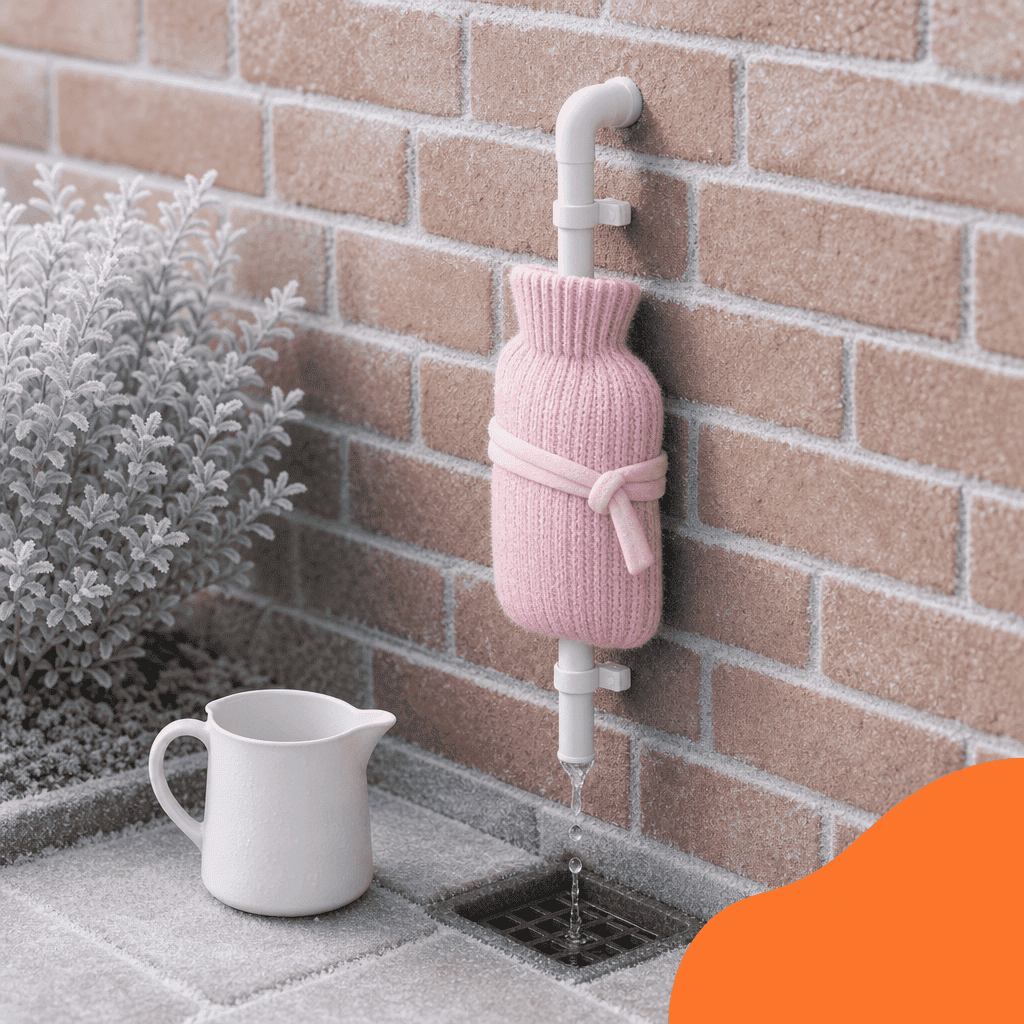
You only need warmth and a bit of patience. A hot water bottle, a microwavable heat pack, or a jug or watering can of warm water will all do the job.
Only do this if you can reach the frozen part of the pipe safely from the ground. Don't climb a ladder in icy conditions. If the pipe is high up, call an engineer instead.
Step by step
- Find the pipe. Follow the white plastic pipe from the bottom of your boiler to where it goes through the wall and runs outside to a drain.
- Work out where it's frozen. Ice usually forms at the open end of the pipe, or at a bend or dip where water collects.
- If the pipe has insulation on it, take it off the frozen section.
- Warm the frozen section. Hold a hot water bottle or heat pack against it, or wrap it in a cloth soaked in hot water.
- Or slowly pour warm water along the pipe from a jug or watering can. Keep going until the ice clears and water runs out of the end.
- Reset your boiler. Press the reset or restart button. Your manual shows how for your model.
- Put the insulation back on to help stop it refreezing.
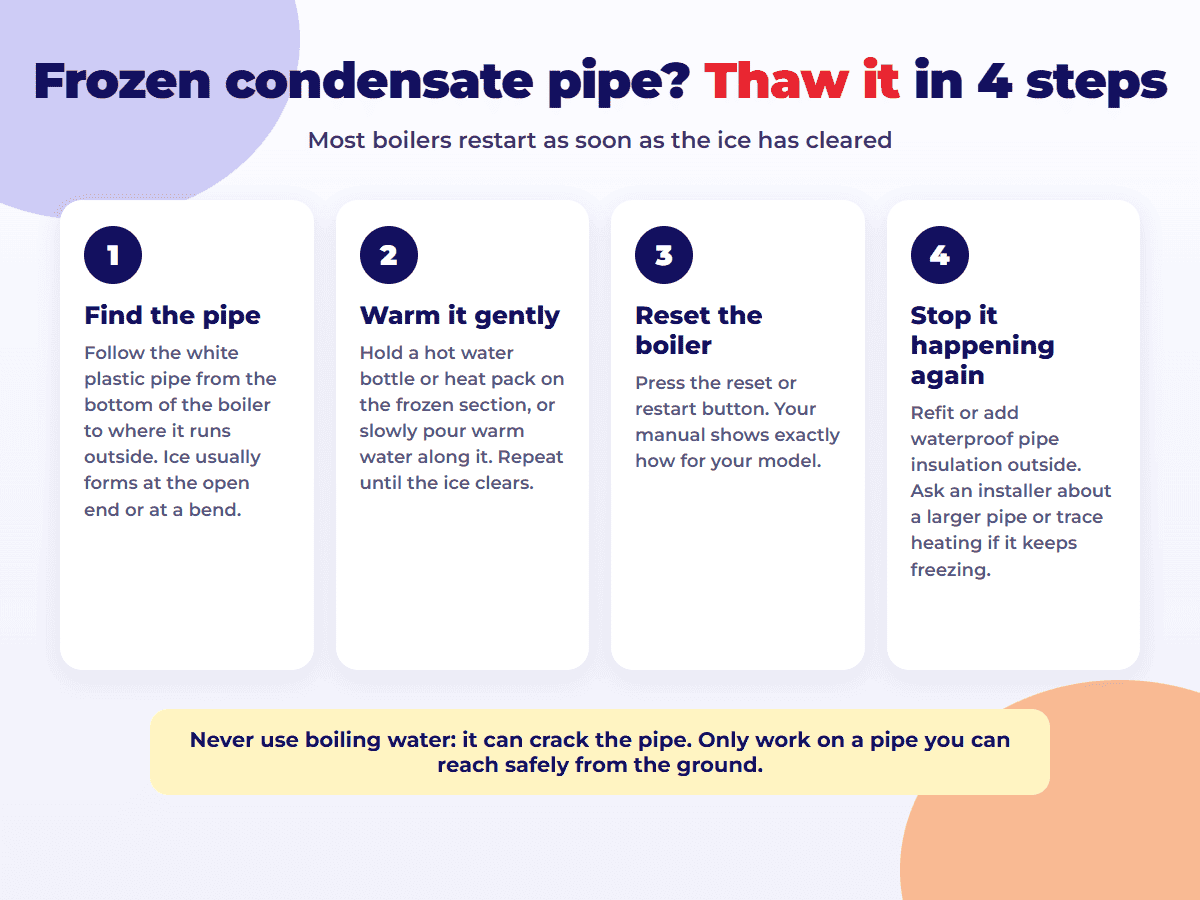
Never use boiling water. It can crack the plastic pipe. Use warm water instead. Water poured onto a path or patio can also freeze and become slippery, so take care where it runs. And never take the boiler casing off yourself.
What if your boiler still won't work?
If the fault comes back straight after a reset, there may still be ice further along the pipe, so check the whole outside run. Don't keep resetting the boiler over and over: if it still won't stay on, the problem is likely to be something else.
Low pressure is another common reason boilers stop in winter. Our boiler pressure guide explains how to check it. If neither is the cause, call a Gas Safe registered engineer.
If you smell gas
- Open doors and windows.
- Don't smoke, light matches or use any naked flame.
- Don't switch electrical items on or off, including lights.
- Turn off the gas at the emergency control valve next to the meter, if you can safely reach it and it isn't in a cellar or basement.
- Leave the property and, once outside, call the National Gas Emergency Service on 0800 111 999. It's free and open 24 hours a day.
How to stop your condensate pipe freezing
- Insulate it. Fit waterproof, weatherproof pipe insulation along the whole outside run, with the joints taped so they can't work loose. It's cheap from any DIY shop and is the single most effective fix.
- Protect the end. Worcester Bosch suggests fitting a drain cover to protect the open end of the pipe.
- Check your manual for cold-weather settings. For example, Worcester Bosch advises turning the heating control on the boiler up to maximum during freezing weather.
- Ask about a bigger pipe or trace heating. If it freezes every winter, an engineer can fit a wider pipe for the outside section, which industry best practice recommends, or a trace heating cable that gently warms the pipe when it's cold.
Frozen condensate pipe questions
Old boiler letting you down this winter? See your fixed price for a new one
Get my fixed priceReviewed by our technical team. All BoxHeat articles are written by experienced heating professionals and reviewed by our team of Gas Safe registered engineers to ensure accuracy, safety, and compliance with current UK building regulations and manufacturer guidelines.