In this article
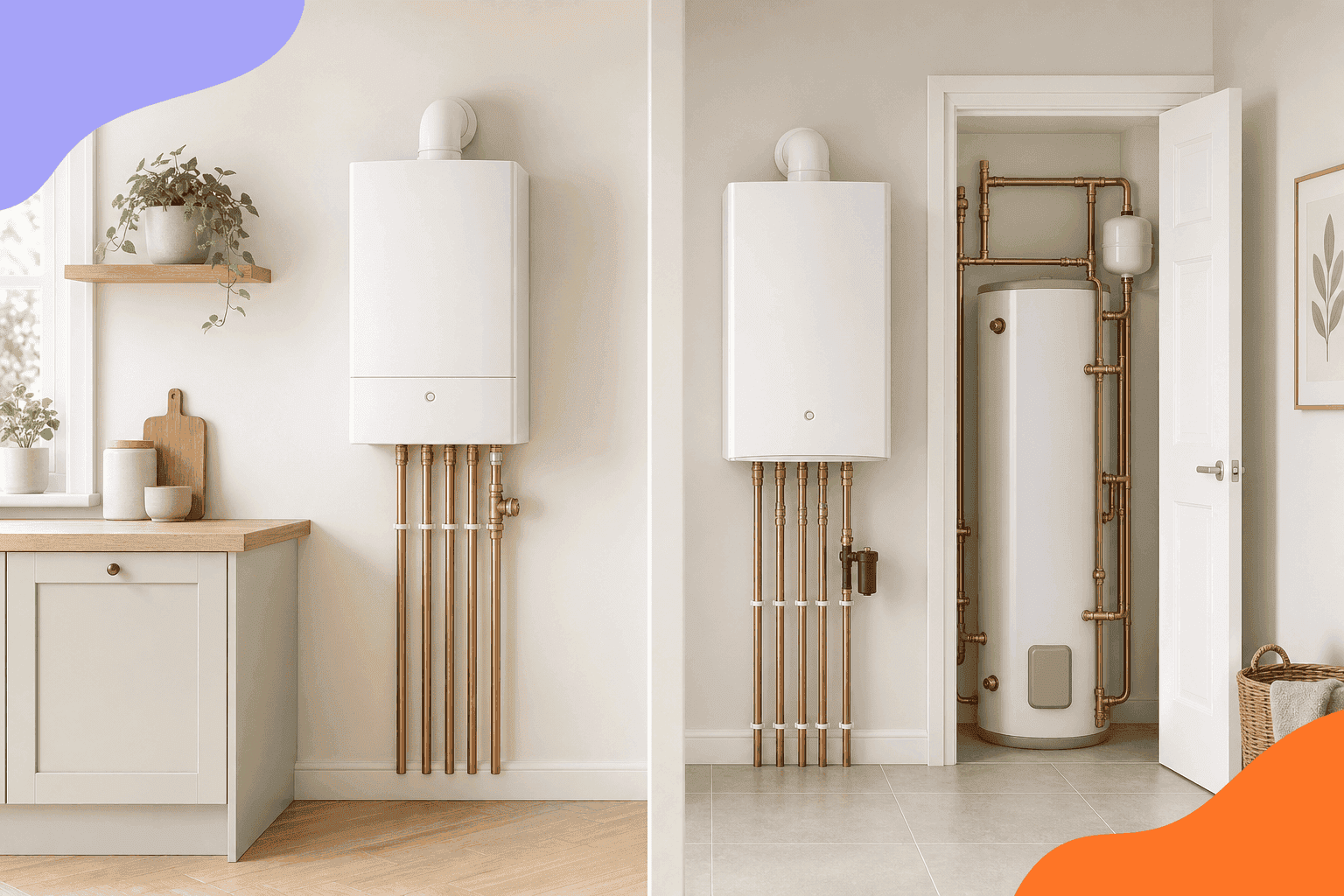
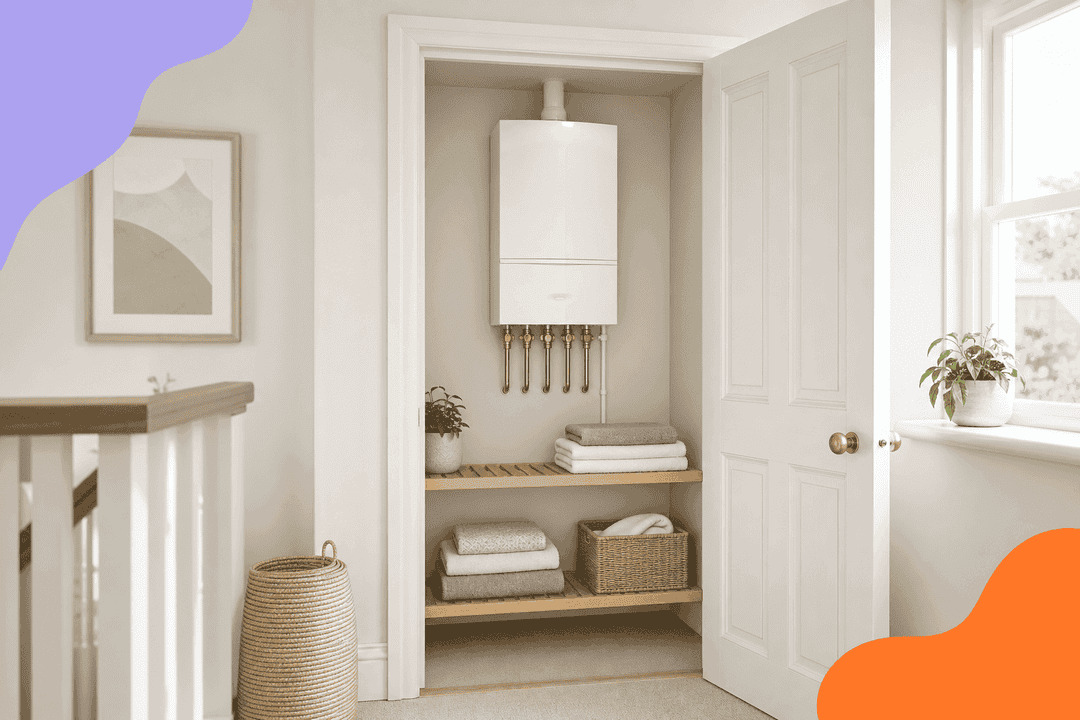
If you have a system or regular boiler, you also have a hot water cylinder, and with a regular boiler, tanks in the loft too. Swapping to a combi does away with them. Hot water comes straight from the mains instead, and the airing cupboard becomes a cupboard again.
It's a popular change, but it isn't right for every home. This guide explains what the conversion involves, what changes day to day, and how to tell whether a combi will keep up with your household.
Quick answer
- What changes: the hot water cylinder comes out, and with a regular boiler the loft tanks are no longer needed. The combi heats water from the mains as you use it.
- Usually suits: homes where hot water is mostly needed in one place at a time, with a good mains water supply.
- Think twice if: several showers often run at once, your mains supply is weak, or you're planning a heat pump, which usually needs a cylinder.
- With BoxHeat: we convert regular, system and back boilers to combis, and the conversion work is included in your fixed price.
What changes when you switch to a combi
A combi is a boiler and water heater in one. It heats your radiators like any other boiler, but it heats hot water on demand, straight from the cold mains, so there's nothing to store. What gets removed depends on what you have now.
| What you have now | What usually changes |
|---|---|
| System boiler with a hot water cylinder | The cylinder is removed and the pipework is altered. The heating is already a sealed system, so that side changes little. |
| Regular (heat-only) boiler with a cylinder and loft tanks | The cylinder is removed and the loft tanks are no longer needed. The heating becomes a sealed, pressurised system, and the pipework is altered. |
| Back boiler behind a fire | A bigger job, covered in our back boiler replacement guide. |
Not sure which type you have? Our combi vs system boiler guide explains how each one works.
Is a combi right for your home?
The question that matters most isn't how many bedrooms you have. It's how often your household needs hot water in more than one place at the same time.
A combi works well for one bathroom. It's less happy when two showers and the washing machine all want hot water at 7.30am. Combis tend to suit smaller households, and are less suited to homes with several bathrooms in regular use, high hot water demand or low water pressure.
A combi may suit you if
- hot water is usually needed in one place at a time
- you have one main bathroom, or extra bathrooms are rarely used at the same time
- you'd like the space taken up by the cylinder or loft tanks back
- your mains water flow and pressure are good
Keeping a cylinder may suit you better if
- several people regularly shower at the same time
- the water coming into your home is slow or weak
- you value an electric immersion heater as a backup if the boiler is out of action
- you're considering a heat pump or solar water heating
Your mains supply sets the limit
A combi can only deliver as much hot water as your incoming mains provides. Flow and pressure aren't the same thing, and the flow you get depends on the size, type and condition of the pipe bringing water into your home. A bigger combi won't make up for a weak supply, which is why the supply is checked before a conversion.
What the conversion work involves
Converting to a combi is more involved than swapping like for like, because the hot water side of your home changes. Moving from a boiler with a loft tank and an airing cupboard cylinder means removing those and running new pipework, which can sometimes mean lifting floorboards. The work must be done by a Gas Safe registered engineer.
Before and during the work, the engineer will typically check:
- Mains water flow and pressure, so the combi can deliver the hot water you need.
- The gas supply, to make sure the pipe to the boiler can deliver enough gas for the new boiler.
- Your showers. Showers fed from a tank, including pumped power showers, need changing to work from the mains. Electric showers already run from the cold mains, so they aren't affected.
- Radiators and pipework, especially when a regular boiler's open system becomes a sealed, pressurised one.
Because there's more to do, a conversion takes longer than a straight swap. Afterwards, your heating has a pressure gauge to keep an eye on, and our boiler pressure guide explains what it should read.
What you gain and what you give up
| You gain | You give up |
|---|---|
| Space: no cylinder, and no loft tanks with a regular boiler | Stored hot water that several taps and showers can share |
| Hot water on demand, with no waiting for a cylinder to heat up | An immersion heater as a backup if the boiler breaks down |
| Fewer separate parts in the system | A cylinder ready for a future heat pump or solar water heating |
The heat pump point is worth weighing. Most heat pumps work with a hot water cylinder, so if you switch to a combi now, you may need to put a cylinder back in if you want a heat pump in future.
Converting to a combi with BoxHeat
We convert regular boilers, system boilers and back boilers to combi boilers. Tell us about your home and current boiler in our online quote and any conversion work your home needs is included in one fixed price, so there's no separate bill for the extra work.
Every installation is carried out by Gas Safe registered engineers and includes a magnetic system filter, a chemical system flush and inhibitor treatment, and we register your manufacturer warranty for you. Monthly finance is available, subject to status. See finance options.
Prefer to keep stored hot water? We don't quote hot water cylinder work online, but you can call us on 020 4614 2422 and we can arrange it.
Not sure what size combi you'd need? Our boiler size guide explains the kW ratings. When you're ready, get your fixed price for a combi conversion.
If you smell gas
- Open doors and windows.
- Don't smoke, light matches or use any naked flame.
- Don't switch electrical items on or off, including lights.
- Turn off the gas at the emergency control valve next to the meter, if you can safely reach it and it isn't in a cellar or basement.
- Leave the property and, once outside, call the National Gas Emergency Service on 0800 111 999. It's free and open 24 hours a day.
Combi conversion questions
Ready to switch to a combi? See your fixed price
Get my fixed priceReviewed by our technical team. All BoxHeat articles are written by experienced heating professionals and reviewed by our team of Gas Safe registered engineers to ensure accuracy, safety, and compliance with current UK building regulations and manufacturer guidelines.