In this article
Low boiler pressure is one of the most common reasons a combi or system boiler stops giving you heating or hot water, especially when the weather turns cold. The good news is that it's often something you can put right yourself in a few minutes.
This guide explains what your pressure gauge should read, how to top the pressure back up safely, and what it means if the pressure keeps dropping or climbs too high.
Quick answer
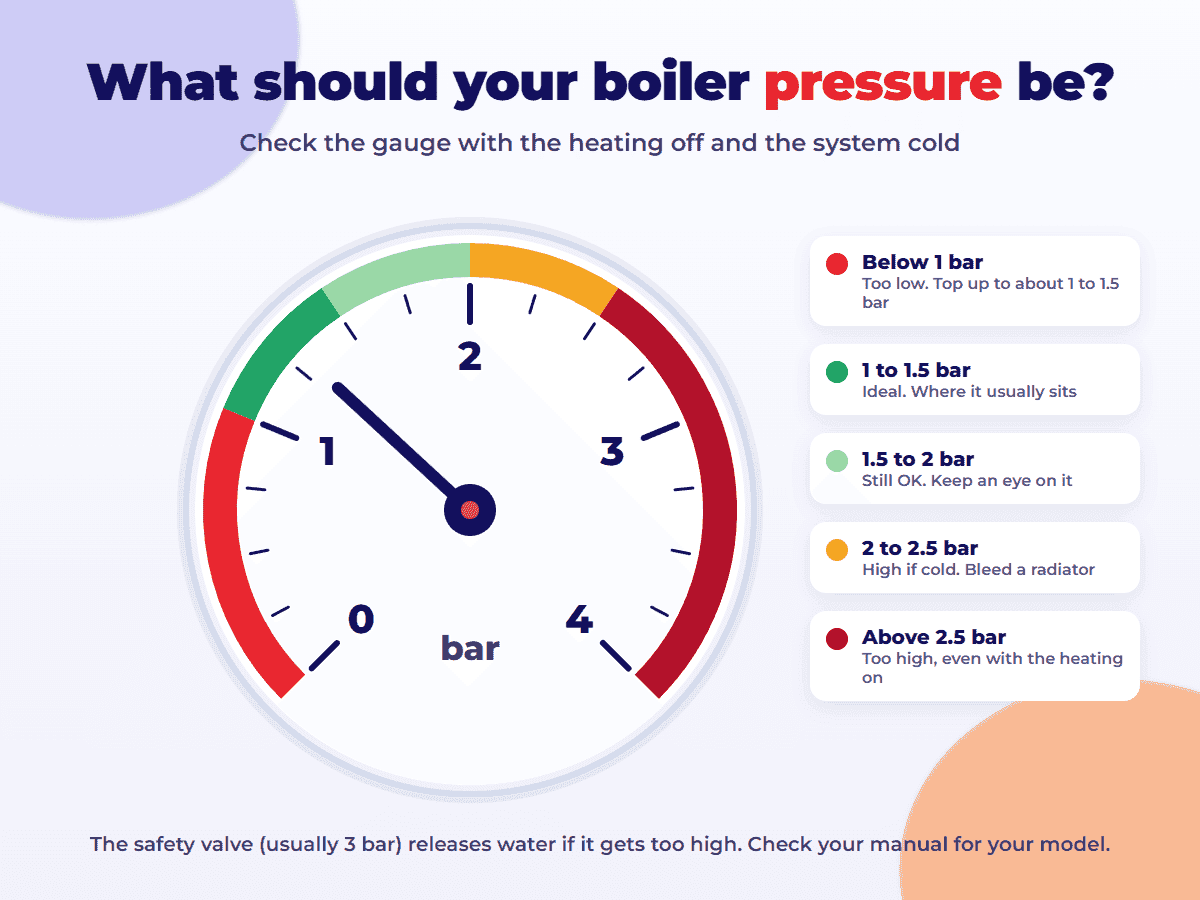
- Usual: about 1 to 1.5 bar with the heating off. Anything up to 2 bar is still fine.
- Heating on: the pressure rises a little as the water warms up, but it shouldn't go above about 2.5 bar.
- Too low: below 1 bar. If it falls far enough, the boiler shuts down and shows a low-pressure fault code.
- Too high: above 2 bar when cold, or above about 2.5 bar when hot. The safety valve, usually set at 3 bar, releases water if it gets that far.
Always check your boiler manual, as the recommended range varies slightly by make and model.
What should my boiler pressure be?
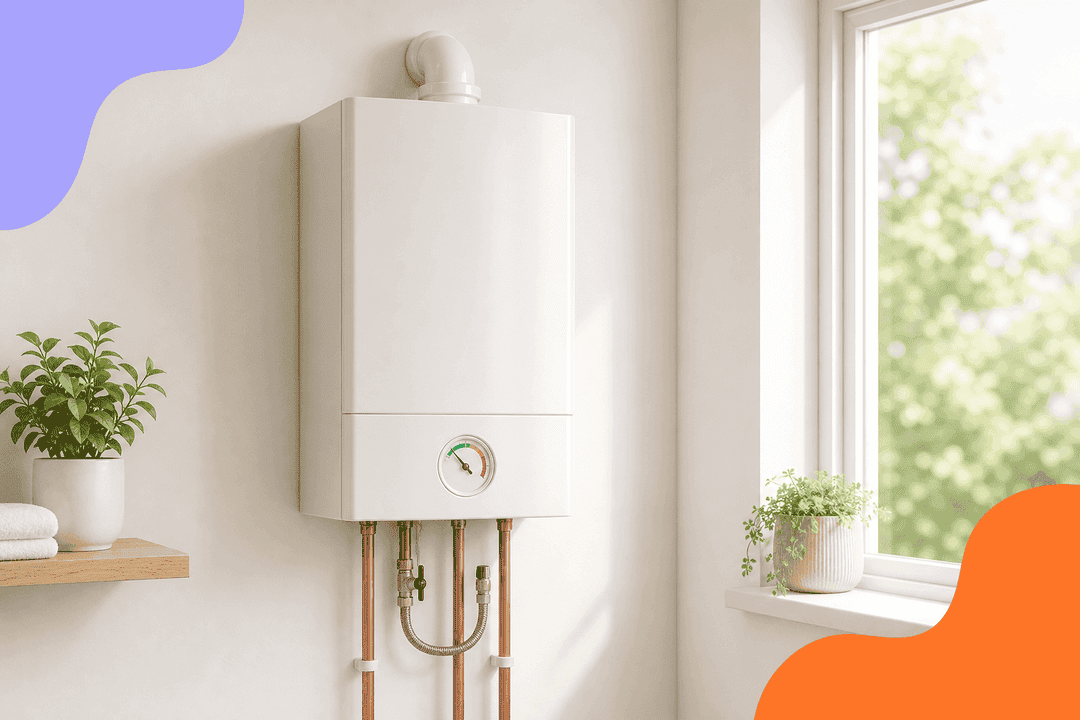
Combi and system boilers run on a sealed heating system, so the water inside needs to be kept at the right pressure. You'll find the reading on a dial gauge on the front or underside of the boiler, or on the digital display on newer models. On a dial, the normal range is usually marked in green.
Check it when the heating has been off for a while, because pressure naturally rises as the water heats up and falls again as it cools.
| Gauge reading (heating off, unless stated) | What it means | What to do |
|---|---|---|
| Below 1 bar | Low. The boiler may stop and show a fault code | Top up to about 1 to 1.5 bar (steps below) |
| 1 to 1.5 bar | Ideal. Where it usually sits | Nothing |
| 1.5 to 2 bar | Still OK | Nothing, but keep an eye on it |
| Above 2 bar | Higher than it needs to be | Bleed a radiator to bring it down |
| Above 2.5 bar with the heating on | Too high | Bleed a radiator; call an engineer if it keeps happening |
Regular (heat-only) boilers are different. They're usually fed by a cold water tank in the loft rather than a sealed system, so many don't have a pressure gauge at all. This guide applies mainly to combi and system boilers. Not sure which you have? Our guide to boiler types explains how to tell.
How to repressurise your boiler
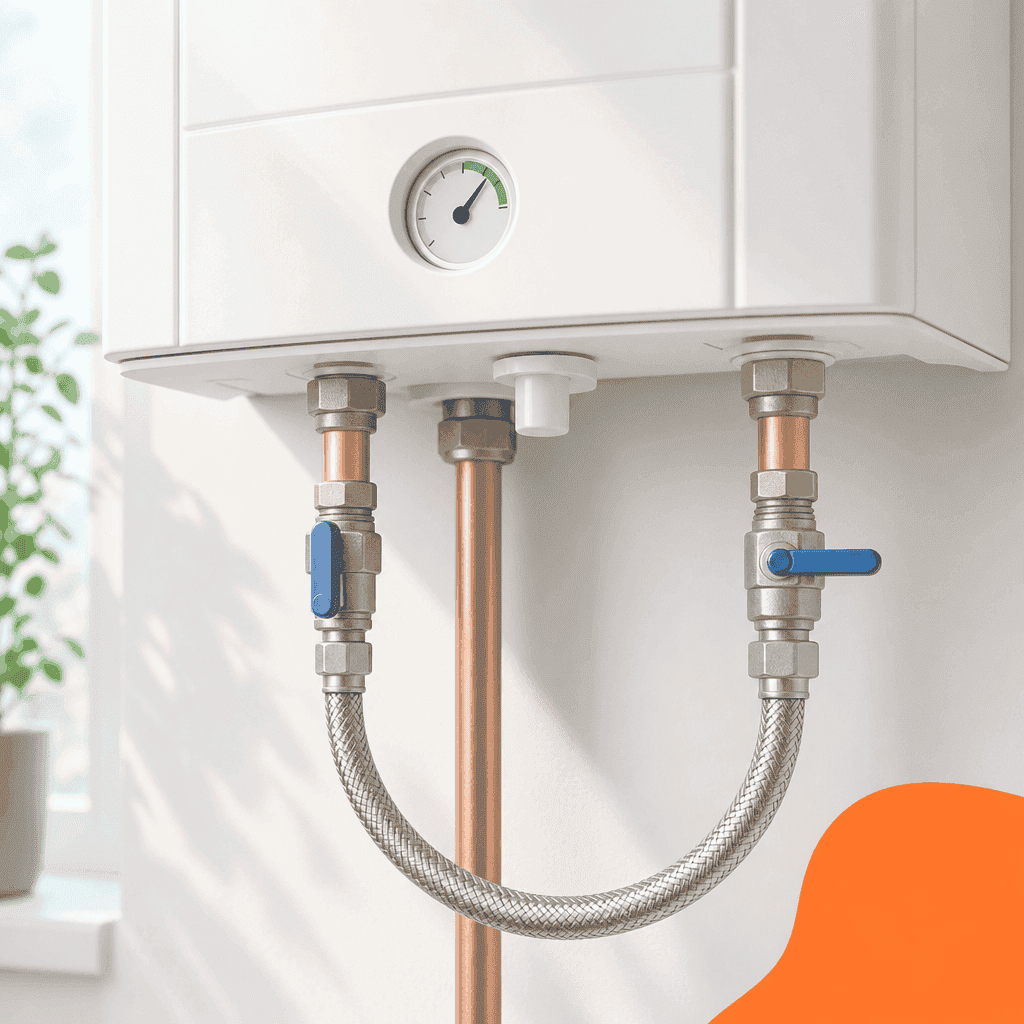
You top up the pressure using the filling loop, which lets water from the mains into the heating system. Most boilers have one of two types:
- External filling loop: a short silver braided hose under the boiler, connecting two pipes, with a valve at one or both ends.
- Built-in filling loop: a lever, tap or key underneath the boiler. Some newer boilers top up from a button on the control panel.
Your boiler manual shows exactly where yours is and how it works.
Step by step
- Turn the boiler off and let the system cool down, so you get an accurate reading.
- If you have an external loop, check both ends of the hose are firmly connected.
- Open the valve slowly. You'll hear water flowing in. If there are two valves, open the first one fully, then open the second slowly.
- Watch the gauge and close the valves as soon as it reaches about 1 to 1.5 bar.
- Make sure both valves are fully closed. If you have an external hose, disconnect it and fit the caps if there are any: it shouldn't be left connected to the heating system. Keep a towel underneath to catch any drips.
- Turn the boiler back on and press reset if it's showing a fault code.
Don't leave the filling loop open or connected. An open valve keeps letting water in until the safety valve opens and discharges water outside. And a hose left connected between the mains and the heating system is against water regulations, because it risks dirty heating water getting back into the drinking water supply.
Why does my boiler keep losing pressure?
Needing to top up once or twice a year is normal, for example after bleeding radiators. If you're topping up more often than that, water is escaping from the system and the cause needs finding.
A leak somewhere in the system
Look for damp patches, drips or staining around radiator valves, exposed pipework, towel rails and under the boiler. Small leaks often only show as a white or green crust on a valve. Leaks under floors are harder to find and may need an engineer. If water is coming from the boiler itself, our guide to a boiler leaking water explains what to check and what to do next.
The pressure relief valve
This safety valve releases water if the pressure gets too high. It drains through a pipe that usually runs outside. If that pipe is dripping or there's a damp patch beneath it, the valve may be letting water past and need replacing.
The expansion vessel
The expansion vessel inside the boiler absorbs the extra volume as the water heats up. If it loses its air charge, the pressure shoots up when the heating comes on, the relief valve lets water out, then the pressure drops too low when the system cools. Big swings on the gauge are the tell-tale sign. An engineer can recharge or replace the vessel.
A leak inside the boiler
Drips from inside the casing point to a leak from an internal part such as a pump seal or heat exchanger. Don't remove the boiler casing yourself.
What if the pressure is too high?
The most common cause is simply too much water added while topping up, or a filling loop valve that hasn't been closed properly. First check the filling loop is fully closed. Then, with the heating off and the system cool, bleed a radiator to let a little water out until the gauge drops back to between 1 and 1.5 bar.
If the pressure keeps creeping up with the filling loop closed, the loop's valve may be letting water through, or the expansion vessel may have failed. Both need an engineer.
When to call a Gas Safe engineer
Topping up pressure and bleeding radiators are safe jobs to do yourself. Call a Gas Safe registered engineer if:
- you're having to top up more than once or twice a year
- water is dripping from inside the boiler casing
- the pressure swings sharply between hot and cold
- the boiler won't restart after you've topped it up and pressed reset
If you smell gas
- Open doors and windows.
- Don't smoke, light matches or use any naked flame.
- Don't switch electrical items on or off, including lights.
- Turn off the gas at the emergency control valve next to the meter, if you can safely reach it and it isn't in a cellar or basement.
- Leave the property and, once outside, call the National Gas Emergency Service on 0800 111 999. It's free and open 24 hours a day.
Is it time for a new boiler?
Pressure problems on their own don't mean you need a new boiler. A new relief valve or a recharged expansion vessel is often a simple fix. But if your boiler is more than 10 to 15 years old, keeps breaking down, or the repair quote is getting close to the cost of a replacement, it's worth comparing. Our guide to how long a boiler lasts covers the warning signs.
With BoxHeat, a new combi boiler starts from £1,799 fully installed (correct in October 2026). See how much a new boiler costs for prices by boiler type, or get your fixed price for a new boiler.
Boiler pressure questions
Boiler giving up? See your fixed price for a new one
Get my fixed priceReviewed by our technical team. All BoxHeat articles are written by experienced heating professionals and reviewed by our team of Gas Safe registered engineers to ensure accuracy, safety, and compliance with current UK building regulations and manufacturer guidelines.