In this article
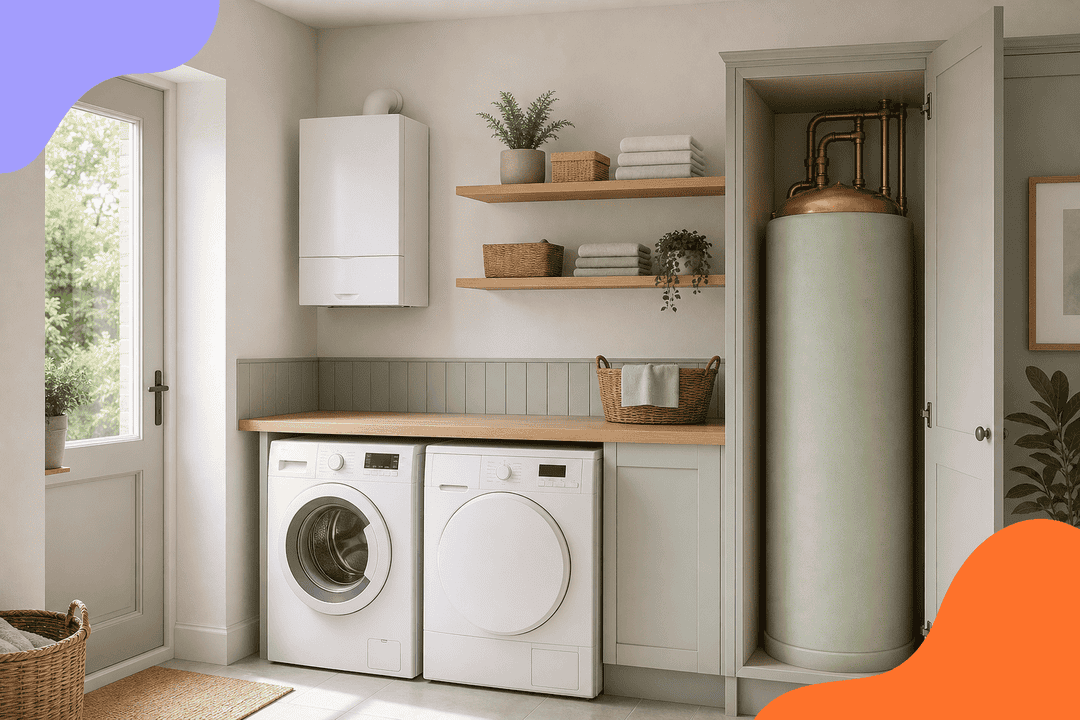
A regular boiler, also called a heat-only or conventional boiler, is the traditional setup found in many older UK homes: a boiler on the wall, a hot water cylinder in the airing cupboard and tanks in the loft.
This guide explains how a regular boiler works, what it does well, where it falls short, and whether to replace it like for like or switch to something else.
Quick answer
- What it is: a boiler that heats your radiators and a hot water cylinder, with tanks in the loft feeding the system.
- Best for: homes that already have a regular system working well, especially where the mains water supply is weak.
- Less suited to: homes short of space, or where you'd like stronger showers without a pump.
- With BoxHeat: a new regular boiler starts from £2,230 fitted (correct in November 2026).
How a regular boiler works
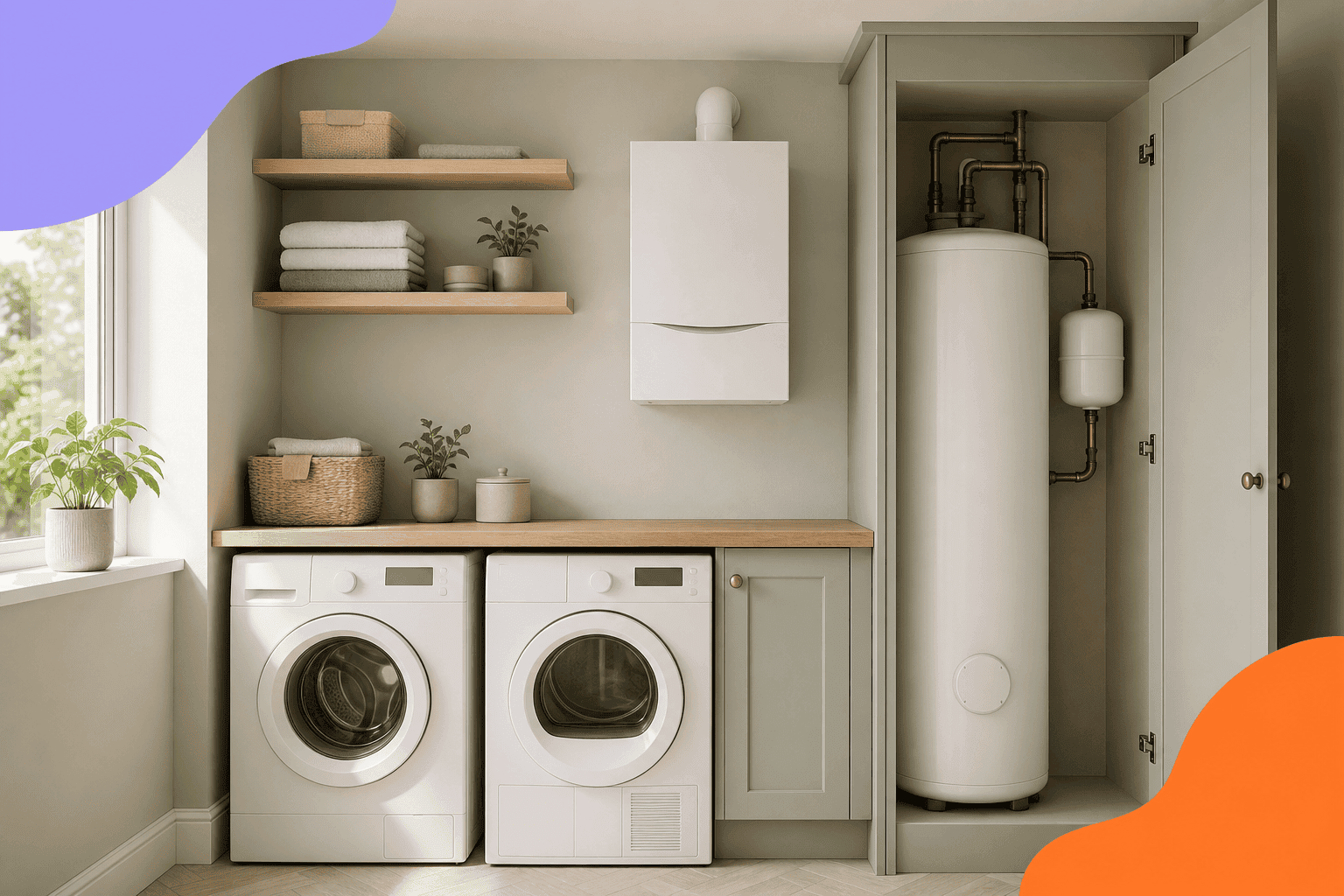
A regular boiler only heats water. It sends it round your radiators and through a coil in a hot water cylinder, which heats the water stored there. Everything else is separate:
- A cold water storage tank in the loft feeds the hot water cylinder.
- A small feed and expansion tank in the loft keeps the heating topped up and gives the water room to expand as it heats.
- A pump and controls are usually fitted separately from the boiler.
The heating is open to the feed and expansion tank rather than sealed and pressurised, which is why many regular boilers don't have a pressure gauge. Hot water pressure comes from gravity, so it depends on how high the loft tank sits above your taps.
Advantages of a regular boiler
- Hot water in more than one place at once. Taps and showers draw from stored hot water, within the cylinder's capacity.
- Doesn't rely on mains pressure. Hot water comes from the loft tank, so it can suit areas where the mains supply is weak.
- Simple to replace like for like. If your system works well, a new regular boiler can usually connect to the existing setup.
- A backup for hot water. Most cylinders have an electric immersion heater.
- Suits some older systems. Older pipework and radiators that were designed for an open system don't have to be changed over to a pressurised one.
Disadvantages of a regular boiler
- It takes up the most space. You need room for the cylinder and two tanks in the loft.
- Lower water pressure. Gravity-fed hot water is often weaker, so strong showers usually need a pump.
- Hot water can run out. Once the cylinder is used up, it needs time to reheat.
- More parts. Loft tanks and pipework in a cold loft need insulating to protect them from freezing.
Replace like for like, or switch?
If your regular system gives you the heating and hot water you need, replacing just the boiler is usually the simplest option. If it doesn't, there are two common alternatives:
| Option | What changes | Worth considering if |
|---|---|---|
| New regular boiler | The boiler is replaced. The cylinder and loft tanks stay | Your system works well and you're happy with your hot water |
| Switch to a combi | The cylinder and loft tanks are no longer needed. The heating becomes a sealed system | You want the space back and hot water is usually needed in one place at a time |
| Switch to a system boiler | The loft tanks go and the heating becomes sealed. Usually a new unvented cylinder is fitted | You want stored hot water at mains pressure for more than one bathroom |
We convert regular boilers to combis, with the conversion work included in your fixed price. Our guide to converting to a combi explains what's involved. We don't quote hot water cylinder work online, so for a switch to a system boiler with a new cylinder, call us on 0345 905 7500 and we can arrange it. Our system boiler guide explains how that setup works.
When the heating changes from an open system to a sealed one, older pipework and radiators come under more pressure, so the engineer checks they're suitable first.
What size regular boiler do you need?
Like a system boiler, a regular boiler is sized for the heat your home loses plus the cylinder, not for instant hot water. The regular boilers we fit range from 12kW to 35kW. Don't assume your old boiler's size was right: older boilers were often oversized. Our boiler size guide gives typical sizes.
How much does a regular boiler cost?
Our regular boiler prices are fixed and include a standard like-for-like installation, with your new boiler connected to your existing cylinder. They range from £2,230 to £3,570:
| Brand | Regular boiler range | BoxHeat price, fitted |
|---|---|---|
| Baxi | 400, 600 and 800 | From £2,230 |
| Worcester Bosch | Greenstar Ri and Greenstar 8000+ | From £2,430 |
| Viessmann | Vitodens 100-W | From £2,580 |
Correct in November 2026. Prices vary by model and output.
You can compare the models on our Baxi, Worcester Bosch and Viessmann pages, which show each boiler's manufacturer warranty. We register the warranty for you, subject to the manufacturer's terms. Monthly finance is available, subject to status. See finance options.
If you smell gas
- Open doors and windows.
- Don't smoke, light matches or use any naked flame.
- Don't switch electrical items on or off, including lights.
- Turn off the gas at the emergency control valve next to the meter, if you can safely reach it and it isn't in a cellar or basement.
- Leave the property and, once outside, call the National Gas Emergency Service on 0800 111 999. It's free and open 24 hours a day.
Regular boiler questions
See your fixed price for a new regular boiler
Get my fixed priceReviewed by our technical team. All BoxHeat articles are written by experienced heating professionals and reviewed by our team of Gas Safe registered engineers to ensure accuracy, safety, and compliance with current UK building regulations and manufacturer guidelines.