In this article
When the heating goes on for the first time in autumn, it's common to find a radiator that won't warm up properly. The good news is that the most common causes are easy to fix yourself, often with nothing more than a radiator key.
Where the radiator is cold tells you a lot about the cause. This guide explains what each cold spot means, how to bleed a radiator, and when it's time to call an engineer.
Quick answer
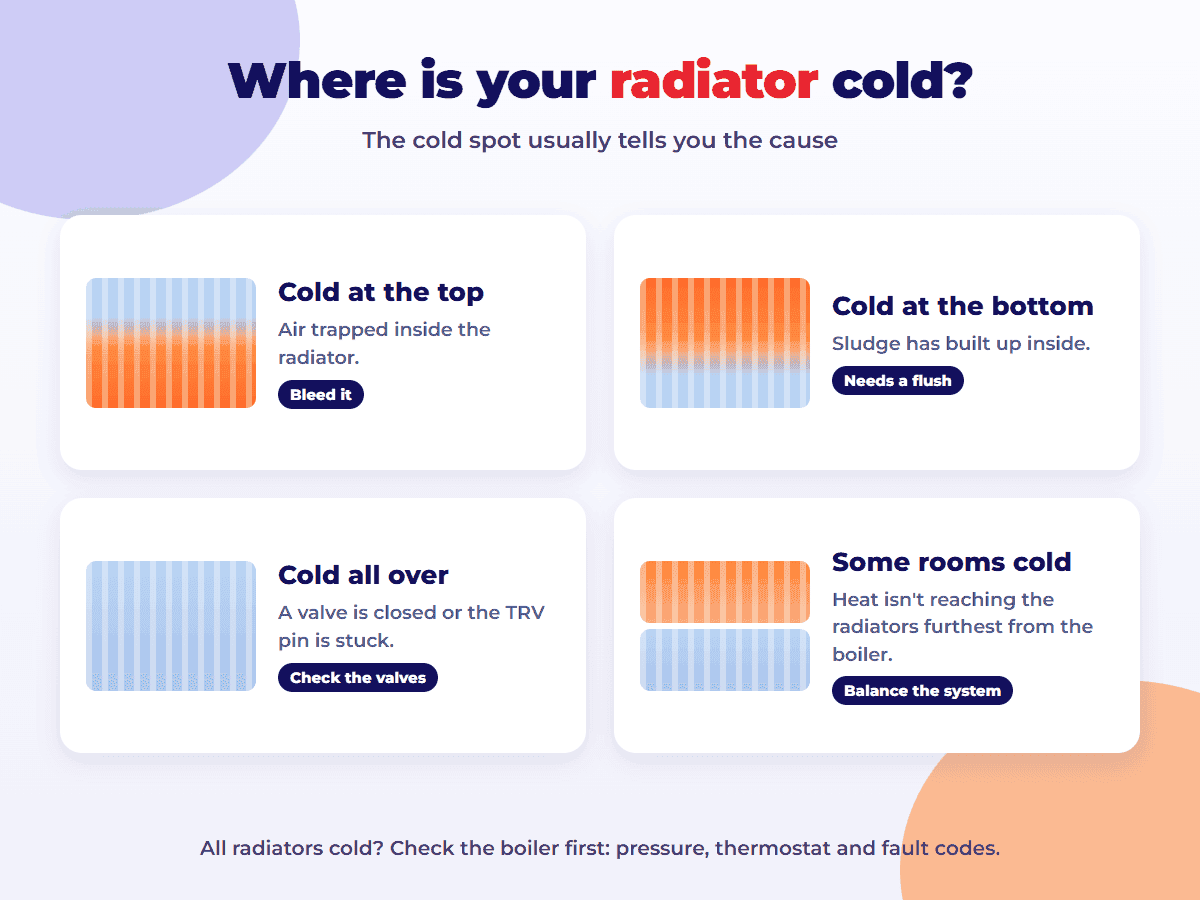
- Cold at the top: trapped air. Bleed the radiator.
- Cold at the bottom: sludge. The radiator or system needs cleaning.
- Cold all over: a valve is closed or the thermostatic valve (TRV) is stuck.
- Some rooms cold: the system probably needs balancing.
- Every radiator cold: check the boiler: pressure, settings and fault codes.
How to bleed a radiator
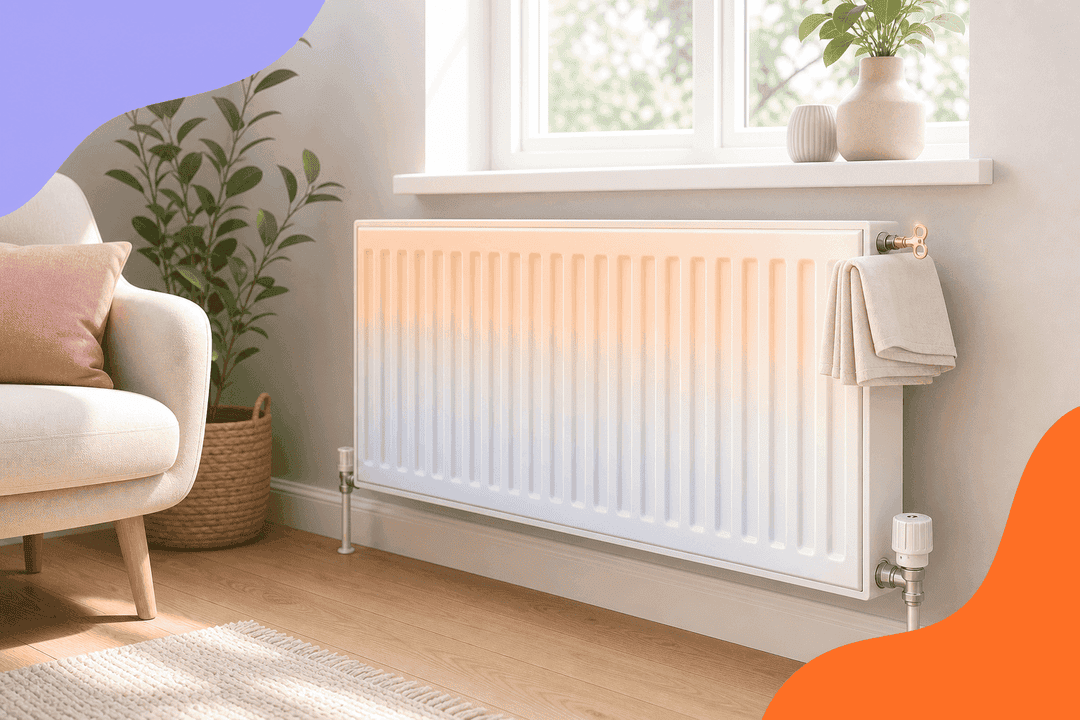
If a radiator is warm at the bottom but cold at the top, or you can hear gurgling, air is trapped inside it. Bleeding lets the air out so hot water can fill the whole radiator. You'll need a radiator key (from any DIY shop, and some valves take a flat screwdriver instead) and a cloth or old towel.
- Turn the heating on and let the radiators warm up, then feel each one to find which need bleeding.
- Turn the heating off and wait for the radiators to cool. This stops hot water spraying out.
- Find the bleed valve at the top corner of the radiator. Hold your cloth under it.
- Fit the key and turn it slowly anticlockwise, a quarter to half a turn. You'll hear a hiss as the air escapes.
- When water starts to come out in a steady flow, turn the key clockwise to close the valve. Don't overtighten it.
- Repeat for any other radiators that need it. If several do, start with the one closest to the boiler.
- Check your boiler pressure and top it up if needed, then turn the heating back on and check the radiators warm up all over.
Bleeding lowers your boiler pressure. On a combi or system boiler, check the gauge afterwards. If it's below 1 bar, top it up to about 1 to 1.5 bar. Our boiler pressure guide shows you how.
Radiator cold at the bottom
If the top is hot but the bottom stays cold, the usual cause is sludge: a build-up of rust and dirt that settles in the bottom of the radiator and blocks the flow of hot water. Bleeding won't fix this.
- One radiator affected: it can be taken off the wall and flushed through with water. This is a messy job, so many people ask an engineer to do it.
- Several radiators affected: the whole system probably needs cleaning, either with a chemical cleaner or a power flush, which pushes water through the system at high flow to clear the sludge.
To stop sludge coming back, the system should have corrosion inhibitor in the water and a magnetic filter that catches debris before it settles. Every boiler we install includes a system flush and a magnetic filter.
Radiator cold all over
If one radiator stays completely cold while the others heat up, hot water isn't getting into it. Check the valves at each end:
- The thermostatic valve (TRV): the numbered head at one end. Turn it up fully. If the radiator still doesn't warm up, the pin underneath may be stuck. With the heating off, unscrew the head and gently press the pin: it should move in and spring back out. If it's stuck, a little lubricant and gentle wiggling with grips can free it. Don't force it.
- The lockshield valve: usually under a plastic cap at the other end. It controls how much water flows through the radiator and may have been closed. It often needs a spanner or valve key to turn.
If you can't free a stuck valve, a heating engineer can replace it.
Some rooms warm, others cold
If the radiators nearest the boiler get hot quickly but those furthest away stay lukewarm, the system is probably unbalanced. Hot water takes the easiest route, so the first radiators on the circuit take most of the heat.
Balancing means adjusting the lockshield valves so the radiators nearest the boiler get a little less flow and the furthest get more. It's a fiddly, trial-and-error job, so many people leave it to an engineer.
If radiators that always used to work have suddenly gone cold, it's less likely to be balancing and more likely to be a problem with the pump or circulation. That needs an engineer.
All radiators cold
If none of your radiators are heating up, the problem is with the boiler or its controls rather than the radiators. Check that:
- the boiler is on and the heating isn't switched off or set to summer or hot-water-only mode
- your thermostat is set higher than the room temperature, and the timer is calling for heat
- the boiler pressure is at least 1 bar
- the boiler isn't showing a fault code
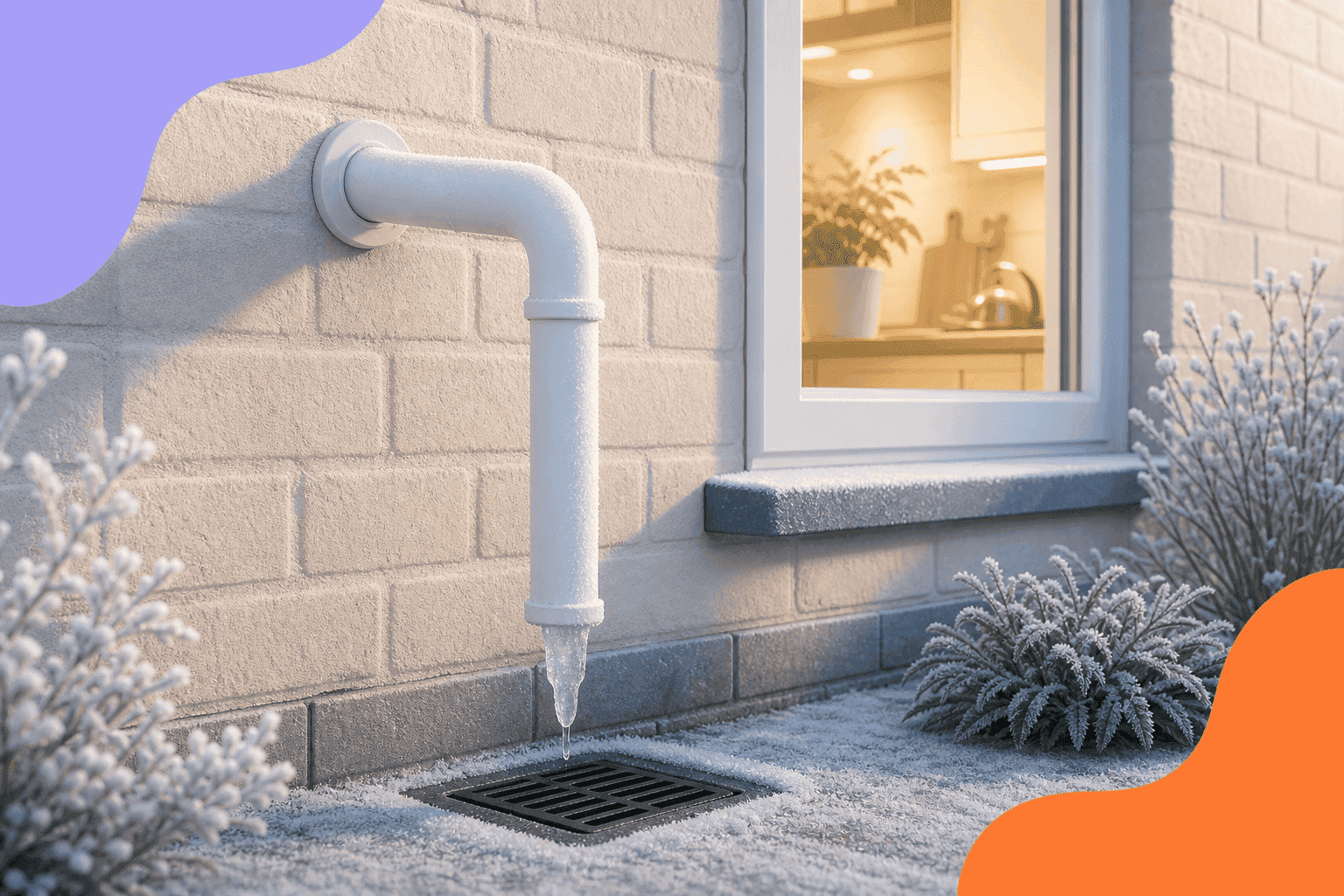
In freezing weather, a frozen condensate pipe is a common cause. If you've no hot water either, our guide to a combi boiler with no hot water walks through the checks.
Radiator questions
Old boiler struggling to heat your home? See your fixed price for a new one
Get my fixed priceReviewed by our technical team. All BoxHeat articles are written by experienced heating professionals and reviewed by our team of Gas Safe registered engineers to ensure accuracy, safety, and compliance with current UK building regulations and manufacturer guidelines.